
A growing number of American skincare enthusiasts are turning to advanced peptides for results that traditional routines cannot deliver. Scientific research highlights that GHK-Cu peptide can stimulate collagen production by over 70 percent, helping skin look firmer and more youthful. If you want to understand how this copper-bound peptide transforms skin health at the cellular level, you will find practical insights and clear benefits that set GHK-Cu apart from common ingredients.
Table of Contents
- What Is GHK-Cu Peptide and How It Works
- Types of GHK-Cu in Skincare Formulas
- Key Benefits: Collagen, Healing, and Glow
- Safety, Risks, and Effective Usage Tips
- Comparing GHK-Cu With Other Peptides
Key Takeaways
| Point | Details |
|---|---|
| GHK-Cu Peptide Benefits | GHK-Cu enhances skin health by stimulating collagen production, reducing inflammation, and boosting antioxidant defenses. |
| Skincare Formulations | GHK-Cu is found in various skincare products, with concentrations between 0.3% and 3%, designed to target multiple skin concerns. |
| Safety Considerations | When using GHK-Cu, it’s essential to introduce it gradually and monitor for individual reactions to minimize sensitivity. |
| Comparative Advantage | Unlike many peptides, GHK-Cu functions as a broad signal molecule, promoting overall skin regeneration and health through multiple mechanisms. |
What Is GHK-Cu Peptide and How It Works
A GHK-Cu peptide is a powerful copper-bound molecule that plays a transformative role in cellular health and skin regeneration. This naturally occurring complex combines glycyl-histidyl-lysine amino acids with copper, creating a potent compound that supports tissue repair and rejuvenation processes.
GHK-Cu functions through multiple advanced mechanisms to support cellular renewal. It operates by remodeling the extracellular matrix through increased collagen and elastin production, which are critical for maintaining skin elasticity and strength. The peptide actively modulates gene expression, enhancing tissue repair pathways and stimulating growth factor activity that supports critical regenerative processes like angiogenesis and nerve tissue reconstruction.
The peptide’s primary benefits stem from its ability to trigger complex cellular communication networks. Key actions include:
Here is a summary of GHK-Cu peptide’s key actions and their impact on skin health:
| Key Action | Result on Skin | Cellular Impact |
|---|---|---|
| Stimulates collagen synthesis | Firmer, more elastic skin | Enhances structural support |
| Reduces inflammation | Calmer, less irritated | Minimizes cellular stress |
| Boosts antioxidant defenses | Improved resilience | Limits oxidative damage |
| Promotes wound healing | Faster recovery | Accelerates tissue repair |
| Modulates gene expression | Enhanced regeneration | Improves cellular renewal |
- Stimulating collagen synthesis
- Reducing inflammation
- Enhancing antioxidant defenses
- Promoting wound healing
- Supporting skin’s natural regeneration processes
Pro Tip for Peptide Research: Always consult scientific literature and verified research sources when exploring peptide applications, as individual responses can vary significantly based on genetic and environmental factors.
For women interested in advanced skin science, exploring comprehensive peptide guides can provide deeper insights into these remarkable molecular mechanisms.
Types of GHK-Cu in Skincare Formulas
GHK-Cu peptide appears in multiple specialized skincare formulations designed to target different aspects of skin health and rejuvenation. Skincare products typically incorporate this peptide in water-soluble concentrations ranging from 0.3% to 3%, carefully calibrated to maximize effectiveness without overwhelming sensitive skin tissues.
Peptide formulations often combine GHK-Cu with complementary ingredients to enhance overall skin performance. Common product types include:
- Face tonics targeting skin elasticity
- Hair tonics supporting follicle density
- Serums focusing on cellular regeneration
- Advanced anti-aging creams
- Targeted repair treatments
These formulations strategically blend GHK-Cu with other peptides like Matrixyl 3000 to amplify skin-firming benefits and minimize fine lines. By utilizing precise molecular combinations, skincare brands can create targeted solutions that address specific skin concerns with remarkable precision.
Pro Tip for Smart Skincare Selection: Always patch test new peptide-based products and introduce them gradually into your skincare routine to assess individual skin compatibility and potential sensitivity.
Understanding advanced peptide skincare strategies can help you make more informed choices about regenerative skin treatments.
Key Benefits: Collagen, Healing, and Glow
GHK-Cu peptide delivers transformative benefits that extend far beyond traditional skincare approaches. The peptide enhances collagen and elastin synthesis, dramatically improving skin firmness and creating a more youthful appearance by supporting the skin’s fundamental structural framework.
Through advanced extracellular matrix remodeling, GHK-Cu provides comprehensive skin renewal benefits that include:
- Accelerated wound healing
- Reduced inflammation
- Enhanced antioxidant protection
- Increased skin hydration
- Improved skin elasticity
The peptide’s molecular mechanism goes beyond surface-level improvements by modulating gene expression and reducing oxidative stress. By stimulating glycosaminoglycan production and supporting cellular communication, GHK-Cu helps create a radiant, resilient complexion that reflects deeper metabolic health and cellular vitality.

Pro Tip for Skin Health: Integrate peptide-rich treatments gradually into your skincare routine, allowing your skin to adjust and maximize potential regenerative benefits.
Exploring comprehensive peptide wellness strategies can help you develop a more holistic approach to ageless skincare.
Safety, Risks, and Effective Usage Tips
GHK-Cu peptide requires careful consideration when incorporating into skincare routines. Recommended usage levels typically range between 0.3% and 3%, making precise concentration critical for achieving optimal results without overwhelming skin tissues.
Formulation strategies demand strategic ingredient compatibility to maintain peptide stability and effectiveness. Important considerations include:
- Avoiding simultaneous use with vitamin C
- Separating hydroxy acid applications
- Adding peptides during product cool-down phase
- Conducting patch tests before full application
- Monitoring skin’s initial response
Individual skin sensitivity varies significantly, so gradual introduction and careful observation are essential. Consulting with skincare professionals can help determine personalized peptide integration strategies that minimize potential adverse reactions while maximizing regenerative potential.
Pro Tip for Peptide Safety: Always introduce new peptide treatments incrementally, starting with lower concentrations and monitoring your skin’s unique response over several weeks.
Understanding advanced peptide wellness approaches can help you navigate potential risks and optimize your skincare journey.
Comparing GHK-Cu With Other Peptides
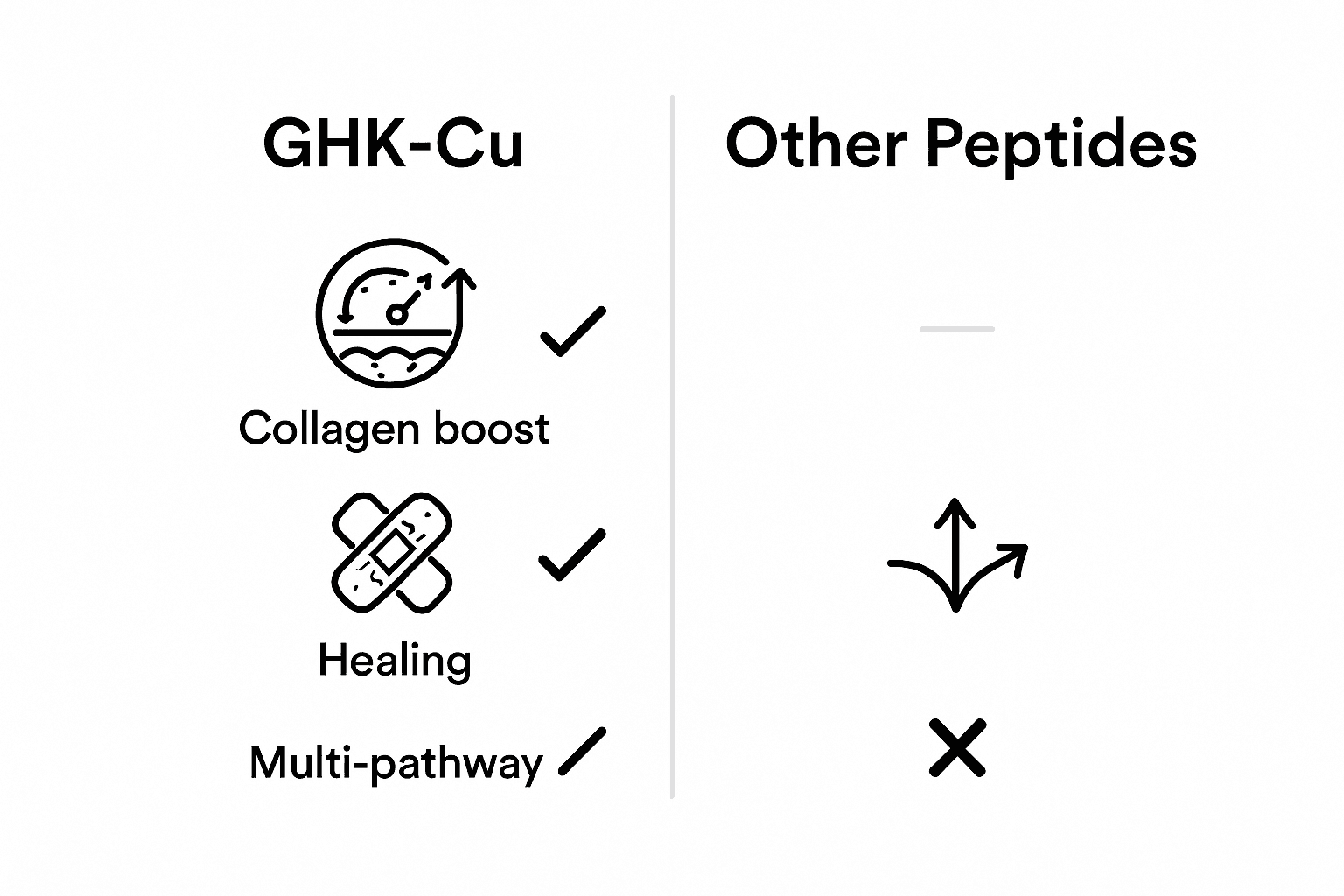
GHK-Cu peptide stands distinctly apart from other skincare peptides through its unique molecular capabilities and comprehensive regenerative approach. Unlike many peptides that target specific skin concerns, GHK-Cu functions as a sophisticated signal molecule that simultaneously stimulates collagen synthesis, reduces wrinkles, and supports overall skin health.
The comparative landscape of peptide technologies reveals nuanced differences in how various peptides interact with skin tissues. Key comparisons include:
The following table compares GHK-Cu to other popular skincare peptides for easier selection:
| Peptide Name | Main Focus Area | Unique Benefit |
|---|---|---|
| GHK-Cu | Regeneration, signaling | Broad, multi-pathway action |
| Matrixyl 3000 | Fine lines, wrinkles | Boosts skin firmness |
| Argireline | Muscle relaxation | Softens expression wrinkles |
| Palmitoyl Pentapeptide | Collagen stimulation | Smooths skin texture |
| Copper Tripeptide | Repair, wound healing | Enhances tissue recovery |
- GHK-Cu: Signal and carrier peptide with broad regenerative capacity
- Matrixyl 3000: Focuses on fine line reduction
- Argireline: Targets muscle relaxation and wrinkle prevention
- Copper Tripeptide: Supports wound healing
- Palmitoyl Pentapeptide: Stimulates collagen production
While other peptides often specialize in singular pathways, GHK-Cu demonstrates remarkable versatility by engaging multiple cellular communication networks. Its ability to modulate gene expression, reduce oxidative stress, and enhance tissue repair sets it apart as a comprehensive skincare solution.
Pro Tip for Peptide Selection: Evaluate your specific skin concerns and consider combining complementary peptides for a synergistic approach to skin rejuvenation.
Exploring comprehensive peptide wellness strategies can help you develop a more nuanced understanding of advanced skincare technologies.
Discover Ageless Skin with GHK-Cu Peptide and Empower Your Glow
The journey to radiant and youthful skin begins with understanding the power of GHK-Cu peptide. This remarkable molecule supports collagen synthesis, reduces inflammation, and promotes cellular renewal, answering your desire for firmer skin and a luminous complexion. If you have struggled with skin firmness, aging signs, or sensitive reactions to new products, embracing peptide science can transform your skincare routine.

Experience skincare that aligns with your feminine self-care goals and modern wellness lifestyle on EmilySandersLifestyle.com. Dive into beginner-friendly explanations of peptides and explore guided lifestyle learning that helps you build confidence through balanced living and radiant skin health. Act now to unlock the secrets of cellular renewal and cultivate your natural glow with trusted, elegant solutions that honor your unique beauty.
Frequently Asked Questions
What is GHK-Cu peptide and how does it benefit the skin?
GHK-Cu peptide is a copper-bound molecule that supports cellular health, skin regeneration, and tissue repair. Its benefits include stimulating collagen synthesis, reducing inflammation, enhancing antioxidant defenses, promoting wound healing, and supporting the skin’s natural regeneration processes, resulting in firmer and more elastic skin.
How should GHK-Cu peptide be incorporated into a skincare routine?
GHK-Cu should be introduced gradually into a skincare routine, starting with lower concentrations (0.3% to 3%). Conduct a patch test before full application and monitor skin sensitivity to ensure compatibility.
What are the main differences between GHK-Cu and other peptides like Matrixyl 3000?
GHK-Cu stands out due to its broad regenerative capabilities, stimulating collagen synthesis and modulating gene expression. In contrast, Matrixyl 3000 primarily focuses on reducing fine lines and wrinkles, while other peptides target specific concerns like muscle relaxation or smoothing skin texture.
Can GHK-Cu peptide be used alongside other skincare ingredients?
Yes, but care must be taken to avoid combinations that may lead to instability or irritation. For instance, it’s recommended to separate GHK-Cu applications from vitamin C and hydroxy acids. Always monitor your skin’s response when layering products.
Recommended
- 7 Essential Things Women Need to Know About GHK-Cu Peptide – EMILY SANDERS LIFESTYLE
- Why Peptides Are Revolutionizing Modern Skincare – EMILY SANDERS LIFESTYLE
- Peptide Explained: Skincare, Health, and Ageless Glow – EMILY SANDERS LIFESTYLE
- Role of Lifestyle in Mature Beauty: How Habits Shape Your Glow – EMILY SANDERS LIFESTYLE
0 comments