
Most American adults report struggling to balance work, relationships, and self-care, yet only a small percentage actually feel satisfied with their lifestyle. Creating true harmony between physical, mental, and emotional health matters more today than ever as stress and burnout threaten daily happiness. Discover realistic ways to shape a balanced lifestyle—so you can invest in your well-being and make small changes with big impact, no matter your starting point.
Table of Contents
- Defining Balanced Lifestyle and Its Essentials
- Key Pillars: Nutrition, Movement, Mindset, Rest
- How Self-Care Practices Foster Balance
- Common Myths About Achieving Balance
- Avoiding Burnout and Everyday Mistakes
Key Takeaways
| Point | Details |
|---|---|
| Balanced Lifestyle Focus | A balanced lifestyle integrates physical, mental, and emotional health through intentional strategies for personal well-being. |
| Key Wellness Pillars | Nutrition, movement, mindset, and rest are crucial pillars that work together to support overall health. |
| Effective Self-Care | Self-care is a necessary practice for wellness, involving mindful movement, emotional regulation, and establishing personal boundaries. |
| Burnout Prevention | Recognizing common pitfalls and setting clear boundaries are essential strategies to prevent burnout and maintain well-being. |
Defining Balanced Lifestyle and Its Essentials
A balanced lifestyle represents a holistic approach to personal wellness that seamlessly integrates physical, mental, and emotional health. At its core, this concept goes beyond sporadic self-care practices to create a sustainable framework for daily living. Drawing insights from lifestyle wellness research for women, balanced living requires intentional strategies that nurture multiple dimensions of personal well-being.
Understanding a balanced lifestyle involves recognizing the interconnected nature of our health domains. According to research from Kansas State University’s Counseling Services, this means maintaining physical health through proper nutrition, consistent exercise, and sufficient sleep, while simultaneously managing stress and cultivating meaningful social connections. The goal isn’t perfection but rather creating a flexible, adaptive approach that supports your individual needs and promotes overall wellness.
Key components of a balanced lifestyle include:
- Physical health optimization through regular movement and nutrition
- Mental wellness strategies like mindfulness and stress management
- Emotional intelligence and relationship nurturing
- Spiritual or personal growth practices
- Professional and personal life integration
Successful implementation of a balanced lifestyle requires continuous self-reflection and gentle adjustment. Rather than viewing wellness as a rigid set of rules, consider it a dynamic, personalized journey that evolves with your changing life circumstances and personal growth.
Key Pillars: Nutrition, Movement, Mindset, Rest
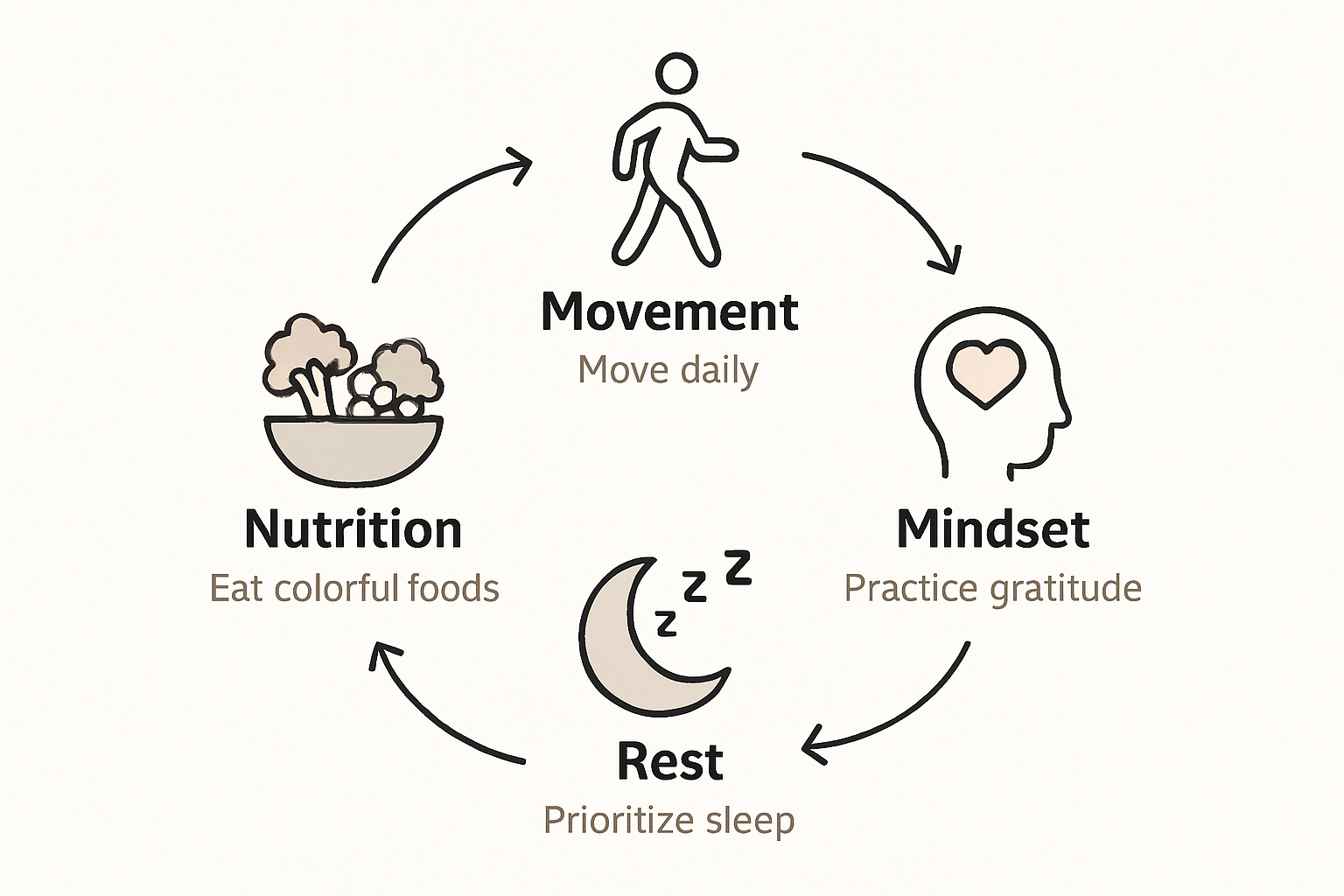
Creating a lasting glow requires a comprehensive understanding of four fundamental wellness pillars that work synergistically to support overall health. Cultivating daily wellness naturally involves intentionally balancing nutrition, movement, mindset, and rest to create a holistic approach to personal vitality.
According to research from Kansas State University’s Counseling Services, these key pillars are deeply interconnected and essential for maintaining optimal energy and concentration. Nutrition forms the foundation, providing the body with necessary nutrients to support cellular function and overall well-being. Movement goes beyond traditional exercise, encompassing daily physical activity that keeps the body dynamic and engaged. Mindset represents the mental and emotional landscape that influences our perception and resilience, while rest ensures the body and mind have adequate time to recover and regenerate.
Each pillar plays a critical role in creating a balanced lifestyle:
- Nutrition: Focuses on whole foods, balanced meal planning, and understanding individual nutritional needs
- Movement: Includes structured exercise, daily activity, and mindful body awareness
- Mindset: Involves stress management, emotional intelligence, and positive psychological practices
- Rest: Encompasses quality sleep, recovery techniques, and intentional relaxation strategies
Successful integration of these pillars requires a personalized approach that recognizes individual differences. By understanding how nutrition fuels movement, how mindset influences recovery, and how rest supports overall performance, women can create a truly dynamic and adaptive wellness strategy that promotes long-term health and radiant well-being.
How Self-Care Practices Foster Balance
Self-care represents a transformative approach to maintaining personal wellness, extending far beyond occasional pampering to a deliberate, consistent practice of nurturing one’s physical, mental, and emotional well-being. Why routines boost beauty demonstrates that intentional self-care practices can create a sustainable framework for holistic health and personal resilience.
According to research from Open Access Government, effective self-care practices play a crucial role in reducing stress and enhancing overall well-being. These practices encompass a wide range of activities, including mindfulness techniques, regular physical activity, and intentional rest periods. By proactively managing personal health through strategic self-care, individuals can develop a more balanced and adaptive approach to life’s challenges, creating a protective buffer against burnout and emotional exhaustion.
Key self-care practices that foster balance include:
- Mindful Movement: Engaging in physical activities that connect body and mind
- Emotional Regulation: Developing strategies for stress management and emotional intelligence
- Nutritional Wellness: Consuming foods that support physical and mental health
- Rest and Recovery: Prioritizing quality sleep and intentional relaxation
- Personal Boundaries: Establishing healthy limits in personal and professional relationships
Successful self-care is not about perfection but about creating a personalized, flexible approach that adapts to individual needs and life circumstances. By viewing self-care as an ongoing, dynamic process of self-discovery and nurturing, women can develop a resilient mindset that supports long-term wellness and personal growth.
Common Myths About Achieving Balance
Achieving a balanced lifestyle is often misunderstood, with numerous misconceptions preventing women from truly embracing holistic wellness. Why routines boost beauty reveals that many popular beliefs about balance actually undermine personal well-being and create unnecessary stress.
Research from the ‘Productive self/vulnerable body’ study highlights a critical insight about self-tracking and overworking, demonstrating how these seemingly productive practices can paradoxically contribute to increased stress and decreased overall balance. The prevalent myth that constant productivity and self-monitoring lead to better health outcomes is fundamentally flawed, suggesting that true wellness requires a more nuanced and compassionate approach.
Common myths about achieving balance include:
- Perfection is the Goal: Believing that a perfectly balanced life exists
- More is Always Better: Thinking more activity equals more productivity
- Self-Care is Selfish: Misunderstanding self-care as a luxury rather than a necessity
- Comparison is Motivating: Using others’ journeys as the standard for personal progress
- Immediate Results are Expected: Assuming wellness transformation happens overnight
Understanding these myths allows women to develop a more realistic and sustainable approach to personal wellness. Balance is not about achieving a static state of perfection, but about creating a flexible, adaptive framework that honors individual needs, respects personal limitations, and celebrates incremental growth and self-compassion.
Avoiding Burnout and Everyday Mistakes
Burnout represents a critical challenge in maintaining a balanced lifestyle, silently eroding personal well-being and productivity. Why routines boost beauty reveals how strategic approaches can help women prevent emotional and physical exhaustion before it takes root.
Research from BMC Medical Education highlights the importance of setting clear boundaries and practicing intentional self-care to mitigate burnout risks. Everyday mistakes often stem from overcommitment, poor stress management, and neglecting personal well-being. By understanding these patterns, women can develop proactive strategies that protect their energy and maintain a sustainable lifestyle approach.
Common burnout-inducing mistakes include:
- Constant Availability: Failing to establish clear personal and professional boundaries
- Perfectionism: Setting unrealistic expectations and self-criticism
- Neglecting Recovery: Overlooking rest and rejuvenation as essential components of productivity
- Comparison Trap: Measuring personal success against unrealistic external standards
- Ignoring Early Warning Signs: Dismissing chronic fatigue, emotional exhaustion, and decreased motivation
Successful burnout prevention requires a holistic, compassionate approach that prioritizes personal resilience. By recognizing potential pitfalls, implementing strategic self-care practices, and maintaining flexible boundaries, women can create a sustainable framework for long-term well-being and personal growth.
Embrace Balance with Intentional Movement and Self-Care
Struggling to maintain a balanced lifestyle while juggling physical health, mental wellness, and emotional resilience? This article highlights the challenge of integrating the key pillars of nutrition, movement, mindset, and rest into daily routines without falling into burnout or perfectionism. If you want to nurture a lasting glow and confidence through practical and gentle self-care, the right support makes all the difference.
Discover how incorporating mindful activity can transform your approach. Explore our Sport and Yoga collection designed to harmonize body and mind, helping you build sustainable movement habits that align with your personal wellness goals.
Take charge of your holistic well-being now by visiting EmilySandersLifestyle.com for curated resources and elegant essentials crafted to support your vibrant, balanced life. Start your journey today with mindful routines and style that inspire radiant health and personal growth.
Frequently Asked Questions
What are the key components of a balanced lifestyle?
A balanced lifestyle includes optimizing physical health through nutrition and exercise, improving mental wellness with mindfulness, nurturing emotional intelligence and relationships, engaging in spiritual growth practices, and integrating personal and professional life.
How can self-care practices contribute to a balanced lifestyle?
Self-care practices can significantly enhance overall well-being by reducing stress, promoting emotional resilience, and ensuring consistent attention to physical health through mindful movement, good nutrition, rest, and boundary-setting.
What are some common myths about achieving balance in life?
Common myths include the belief that perfection is the goal, that more activity equates to more productivity, and that self-care is selfish. These misconceptions often lead to increased stress and hinder true wellness.
How can one avoid burnout while striving for a balanced lifestyle?
To avoid burnout, it’s crucial to set clear boundaries, practice intentional self-care, recognize early warning signs of fatigue, and prioritize rest and recovery as essential elements of maintaining productivity and well-being.
Recommended
- Glow-Enhancing Habits Tutorial for Radiant, Ageless Beauty – EMILY SANDERS LIFESTYLE
- Why Routines Boost Beauty: Complete Guide for Women – EMILY SANDERS LIFESTYLE
- Lifestyle Wellness: Why It Matters for Women – EMILY SANDERS LIFESTYLE
- How to Cultivate Daily Wellness Naturally for Ageless Radiance – EMILY SANDERS LIFESTYLE
0 commentaire