
Most american adults searching for cutting-edge wellness solutions are likely to encounter bold claims about BPC-157. This powerful peptide has sparked interest for its potential to promote healing and tissue repair, yet confusion and misinformation run rampant. With research suggesting BPC-157 can influence everything from muscle recovery to gut health, the line between scientific promise and exaggerated hype remains blurry. Understanding what BPC-157 really is, and what it is not, gives americans clarity to make informed health decisions.
Table of Contents
-
What Is BPC‑157 And Common Misconceptions
-
How BPC‑157 Works In The Body
-
Potential Uses And Healing Benefits
-
Legal Status And Regulatory Risks
-
Safety Concerns And Unregulated Quality
-
Safer Alternatives And Holistic Options
Key Takeaways
Point |
Details |
|---|---|
BPC-157 Overview |
BPC-157 is a synthetic peptide with potential regenerative properties, designed to enhance the body’s healing mechanisms. |
Misconceptions |
BPC-157 is not a steroid, does not provide instant results, and should only be used under medical supervision due to its experimental status. |
Potential Benefits |
The peptide may aid in muscle and tendon recovery, wound healing, and gastrointestinal support, but further research is needed for validation. |
Legal and Safety Considerations |
BPC-157 lacks FDA approval and is banned in professional sports, necessitating caution regarding its usage and the potential for unregulated quality. |
What Is BPC‑157 And Common Misconceptions
BPC-157 is a fascinating peptide that has captured significant attention in wellness and recovery circles, emerging as a potential therapeutic compound with remarkable regenerative properties. This synthetic peptide, derived from a protein found in human gastric juices, represents a cutting-edge approach to healing and tissue repair that goes far beyond traditional medical treatments.
At its core, BPC-157 is a sequence of 15 amino acids designed to support the body’s natural healing mechanisms. Unlike many pharmaceutical interventions that target symptoms, this peptide works by potentially promoting healing at the fundamental biological level. Researchers have observed its potential to stimulate blood vessel formation, enhance tissue regeneration, and potentially reduce inflammation across various body systems.
Some common misconceptions about BPC-157 often stem from misunderstandings about its nature and applications. People frequently mistake it for a performance-enhancing drug or assume it works instantly like a magic solution. The reality is more nuanced:
-
Not a Steroid: BPC-157 is a peptide, not an anabolic steroid
-
Not Instant: Healing and recovery processes take time
-
Not FDA Approved: Currently considered an experimental compound
-
Requires Professional Guidance: Should only be used under medical supervision
While promising research suggests potential benefits for muscle and tendon healing, nerve regeneration, and gut health, it’s crucial to approach BPC-157 with realistic expectations. The peptide is not a miracle cure but a potentially powerful tool in regenerative medicine that requires careful, informed application.
As with any emerging medical technology, ongoing research continues to explore the full potential and limitations of BPC-157.
 Individuals interested in its possible therapeutic applications should consult healthcare professionals who can provide personalized guidance based on individual health profiles and specific wellness goals.
How BPC‑157 Works In The Body
BPC-157 functions as a sophisticated biological conductor, orchestrating complex healing processes within the human body through intricate molecular interactions. Its primary mechanism centers on stimulating growth factor signaling, which enables the peptide to communicate with cells and trigger regenerative responses across multiple physiological systems.
At the cellular level, BPC-157 demonstrates remarkable potential by interacting with endothelial cells and promoting angiogenesis - the formation of new blood vessels. This process is critical for tissue repair, as increased blood flow delivers essential nutrients and oxygen to damaged areas. The peptide seems to activate specific cellular pathways that accelerate healing, potentially reducing inflammation and supporting faster recovery from injuries.
The peptide’s healing mechanisms can be understood through several key biological interactions:
-
Nitric Oxide Production: Stimulates nitric oxide synthase, improving blood flow
-
Growth Factor Activation: Enhances growth hormone receptor interactions
-
Collagen Formation: Supports connective tissue regeneration
-
Inflammation Reduction: Modulates inflammatory response pathways
One of the most intriguing aspects of BPC-157 is its systemic versatility. Rather than targeting a single body system, it appears to support healing across multiple domains - from muscle and tendon repair to potential neurological and gastrointestinal benefits. This broad-spectrum approach suggests the peptide works by fundamentally supporting the body’s natural regenerative capabilities.
Researchers continue to explore the complex ways BPC-157 communicates with biological systems, recognizing its potential as a powerful tool in regenerative medicine.
While promising, the peptide remains an experimental compound requiring further scientific investigation to fully understand its comprehensive healing mechanisms.
Potential Uses And Healing Benefits
BPC-157 emerges as a remarkable peptide with wide-ranging potential healing applications that extend across multiple body systems. According to PubMed, the peptide demonstrates significant capabilities in promoting healing processes by dramatically enhancing granulation tissue formation, angiogenesis, and collagen production across various experimental models.
Muscle and tendon recovery represent one of the most promising areas of BPC-157’s potential therapeutic applications. PubMed research revealed extraordinary findings about its ability to accelerate muscle injury healing, showing remarkable improvements in multiple dimensions. The peptide has been observed to reduce hematoma and edema, prevent post-injury leg contracture, and substantially enhance enzyme activity related to muscle repair.
The potential healing benefits of BPC-157 span several critical areas:
-
Muscle Regeneration: Accelerates muscle tissue repair and reduces recovery time
-
Wound Healing: Promotes faster closure of skin incisions and surgical wounds
-
Gastrointestinal Support: Potentially aids in healing intestinal and stomach injuries
-
Nerve Tissue Repair: Shows promise in supporting neurological recovery
-
Inflammation Reduction: Helps modulate inflammatory responses
Beyond physical trauma recovery, researchers are exploring BPC-157’s potential in addressing more complex health challenges. Early investigations suggest possible applications in managing chronic conditions, supporting joint health, and potentially assisting neurological recovery. However, it’s crucial to understand that while the initial research is promising, most studies remain experimental, and more comprehensive human trials are needed to fully validate these potential therapeutic applications.
As scientific understanding of this peptide continues to evolve, healthcare professionals and researchers remain cautiously optimistic about its future role in regenerative medicine. The intricate ways BPC-157 interacts with biological systems continue to fascinate medical researchers, offering glimpses into potentially groundbreaking therapeutic approaches.
Legal Status And Regulatory Risks
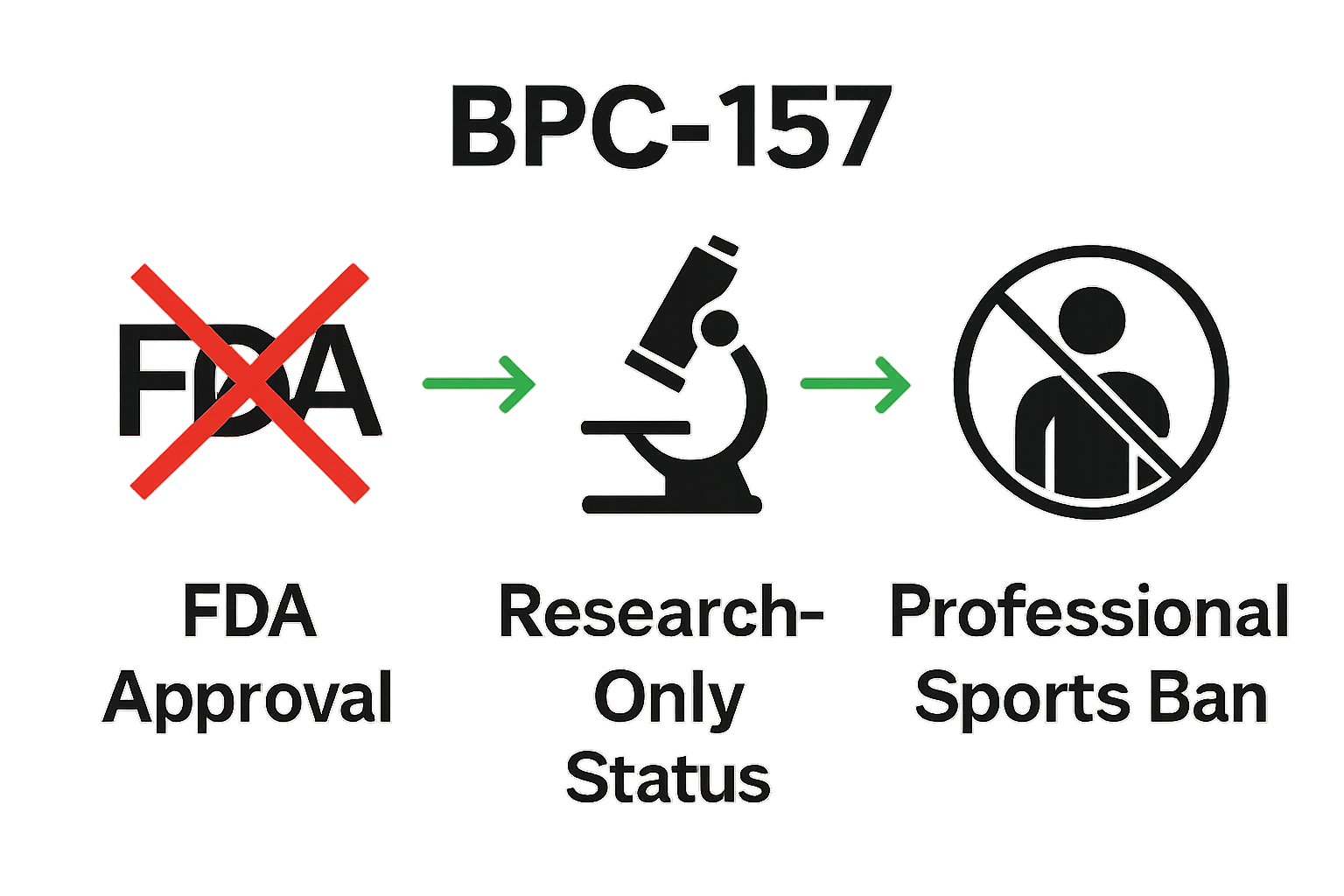
The legal landscape surrounding BPC-157 is complex and fraught with significant regulatory challenges. According to PubMed, the peptide currently lacks FDA approval and is explicitly banned in professional sports environments, creating substantial legal and professional risks for potential users.
Research indicates ongoing scientific evaluation of the peptide’s potential medical applications. PubMed studies reveal that BPC-157 is currently undergoing clinical trials for conditions like inflammatory bowel disease and multiple sclerosis. However, its unapproved status means users must navigate a minefield of potential legal and health complications.
Key legal and regulatory considerations include:
-
No FDA Approval: Not currently authorized for medical use
-
Professional Sports Ban: Prohibited in competitive athletic environments
-
Research-Only Status: Limited to experimental and scientific contexts
-
Potential Legal Consequences: Risks of using an unapproved compound
-
Medical Liability: Potential complications for healthcare providers
Individuals considering BPC-157 must understand the significant legal and health risks associated with its use. While scientific research continues to explore its potential, the current regulatory framework means personal use carries substantial legal and medical uncertainties. Professional medical guidance is absolutely essential before considering any experimental peptide.
As research progresses, the regulatory landscape may evolve. However, at present, BPC-157 remains a experimental compound with significant legal restrictions. Responsible individuals should prioritize safety, legal compliance, and professional medical consultation when evaluating any potential therapeutic interventions.
Safety Concerns And Unregulated Quality
The safety profile of BPC-157 presents a complex landscape of potential risks and promising preliminary research. According to PubMed, preclinical studies have demonstrated no adverse effects across multiple organ systems, yet the significant lack of comprehensive clinical safety data creates substantial uncertainty about long-term usage and potential unknown risks.
PubMed research indicates that while clinical trials for inflammatory bowel disease have shown no reported toxicity, the absence of standardized regulatory approval means significant variability in product manufacturing and quality could pose serious health risks. The unregulated nature of peptide production means consumers face potential dangers from contamination, inconsistent peptide concentrations, and unpredictable manufacturing processes.
Key safety considerations include:
-
Manufacturing Inconsistency: No standardized production protocols
-
Potential Contamination: Risks of impure or adulterated peptide sources
-
Limited Clinical Data: Insufficient long-term safety research
-
Unpredictable Interactions: Unknown effects with other medications
-
Individual Variation: Potential for unexpected physiological responses
Professional medical consultation is absolutely critical before considering BPC-157. The current scientific understanding suggests potential benefits, but the lack of comprehensive safety data means individuals must approach this experimental peptide with extreme caution. Responsible users should prioritize rigorous medical oversight, thorough personal health assessments, and a comprehensive understanding of potential risks.
As research continues to evolve, the scientific community remains cautiously optimistic yet fundamentally concerned about the unregulated status of BPC-157. Until comprehensive clinical trials establish definitive safety protocols and long-term effects, individuals must remain vigilant and prioritize their health and safety above potential experimental benefits.
Safer Alternatives And Holistic Options
Holistic healing offers numerous alternatives to experimental compounds like BPC-157, focusing on comprehensive wellness strategies that prioritize safety and proven effectiveness. According to PubMed, clinicians recommend exploring alternative treatments that comply with established medication and supplement safety standards, particularly for athletes seeking recovery and performance optimization.
PubMed research suggests exploring therapies that engage the brain-gut axis and support natural healing processes. Given the current limitations in BPC-157 research, individuals can consider a range of scientifically supported holistic approaches that promote overall wellness and targeted recovery.
Safer alternatives for healing and recovery include:
-
Natural Anti-Inflammatory Supplements: Turmeric, omega-3 fatty acids
-
Physical Therapy: Professional guided rehabilitation techniques
-
Nutrition-Based Recovery: Targeted dietary interventions
-
Adaptogenic Herbs: Natural stress and recovery support
-
Comprehensive Wellness Programs: Integrated health approaches

0 commentaire