
Over 40 percent of American adults struggle with obesity or metabolic issues—yet most have never heard of innovations like Retatrutide. As peptide science advances, new therapies are transforming the approach to weight management and metabolic health for women across the United States. Discover why this breakthrough compound stands out and how its science-backed impact could shape the future of American wellness.
Table of Contents
- Retatrutide And Peptide Science Explained
- What To Expect In Stage 3 Clinical Trials
- Weight Loss And Metabolic Health Benefits
- Trial Safety, Risks, And Side Effects
- How Retatrutide Compares To Similar Peptides
Key Takeaways
| Point | Details |
|---|---|
| Retatrutide’s Mechanism | Retatrutide is a triple-receptor agonist that activates GLP-1, GIP, and glucagon receptors to regulate metabolism effectively. |
| Metabolic Benefits | The peptide demonstrates significant potential in weight loss and metabolic health improvements, particularly in women. |
| Clinical Trial Progress | Stage 3 clinical trials are underway, focusing on various metabolic conditions, with completion expected by 2026. |
| Safety Profile | Retatrutide has a generally favorable safety profile, with mild side effects primarily related to gastrointestinal responses. |
Retatrutide and Peptide Science Explained
Retatrutide represents a groundbreaking advancement in peptide science, emerging as a potent triple-receptor agonist that targets critical metabolic pathways. Peptide research demonstrates this compound uniquely interacts with GLP-1, GIP, and glucagon receptors, creating a sophisticated molecular approach to metabolic regulation.
The scientific mechanism behind Retatrutide is remarkably complex. By simultaneously activating three distinct hormone receptors, this peptide triggers a comprehensive metabolic response. Receptor activation leads to multiple physiological effects: enhanced satiety signals, reduced hunger sensations, and increased energy expenditure. Advanced metabolic studies indicate this multi-receptor approach potentially offers superior glycemic control compared to traditional single-pathway interventions.
Peptide science continues evolving, with Retatrutide representing a cutting-edge example of precision molecular engineering. Women interested in metabolic health can appreciate how these targeted molecular interactions might support weight management and metabolic wellness. The compound’s ability to modulate appetite, regulate insulin sensitivity, and potentially optimize energy utilization makes it a promising area of scientific investigation.
The following table summarizes the major benefits of Retatrutide’s multi-receptor approach:
| Benefit | Physiological Mechanism | Potential Impact |
|---|---|---|
| Enhanced satiety | Stimulates multiple hormone receptors | Reduces hunger and cravings |
| Improved insulin sensitivity | Activates GLP-1 and GIP pathways | Supports glycemic stability |
| Greater energy expenditure | Engages the glucagon receptor | May increase calorie burning |
Pro Health Research Tip: Consult healthcare professionals before considering any peptide-based interventions, as individual metabolic responses can vary significantly between individuals.
What to Expect in Stage 3 Clinical Trials
Comprehensive clinical trials for Retatrutide are currently underway through the TRIUMPH program, representing a critical phase in understanding this innovative peptide’s potential. These stage 3 trials are strategically designed to evaluate Retatrutide’s effectiveness across diverse metabolic health conditions, including obesity, type 2 diabetes, cardiovascular disease, and knee osteoarthritis.
The trial structure involves multiple research protocols targeting different patient populations. Participant selection is rigorous, focusing on individuals with specific metabolic challenges who could potentially benefit from this triple-receptor agonist approach. Clinical research timelines indicate these comprehensive studies are planned for 2025–2026, with researchers aiming to collect extensive data on long-term safety and metabolic impact.
Researchers will be monitoring several key metrics during these trials, including weight reduction, glycemic control, appetite regulation, and potential side effects. The multifaceted nature of Retatrutide means scientists are not just evaluating weight loss, but comprehensive metabolic transformation. Participants can expect detailed medical assessments, regular check-ins, and potentially transformative insights into their metabolic health.
Pro Research Participant Tip: Always discuss clinical trial participation with your healthcare provider, understand the full scope of the study, and ensure you meet all screening criteria before committing to any research program.
Weight Loss and Metabolic Health Benefits
Breakthrough clinical research reveals Retatrutide’s remarkable potential for transforming metabolic health and weight management. This innovative peptide has demonstrated extraordinary capabilities in addressing multiple dimensions of metabolic wellness, showing significant promise for women struggling with weight-related health challenges.
The weight loss outcomes are particularly impressive. Advanced pharmaceutical studies indicate that participants experienced substantial body weight reductions ranging from 15–25% at higher dosages. These results are not just about numbers on a scale, but comprehensive metabolic improvements including reduced body mass index, decreased waist circumference, improved blood pressure, and enhanced glucose metabolism.

Beyond weight loss, Retatrutide’s multi-receptor approach addresses broader metabolic health markers. The compound demonstrates remarkable effects on critical health indicators such as fasting plasma glucose, HbA1c levels, cholesterol, and triglycerides. This holistic approach means women can potentially achieve more than weight reduction—they can experience a fundamental reset of metabolic processes, supporting overall wellness and potentially reducing risks associated with obesity-related health conditions.
Pro Metabolic Health Tip: Consult with healthcare professionals to understand how individual metabolic profiles might interact with emerging peptide therapies, ensuring personalized and safe approaches to weight management.
Trial Safety, Risks, and Side Effects
Comprehensive safety research indicates that Retatrutide demonstrates a promising safety profile with manageable side effects typical of advanced metabolic therapies. Women considering this treatment should understand that while side effects exist, they are generally mild and transient, reflecting the compound’s sophisticated molecular design.
The most common side effects cluster around gastrointestinal responses. Detailed clinical evaluations reveal a predictable pattern of gastrointestinal interactions, including mild to moderate instances of nausea, vomiting, diarrhea, and constipation. These symptoms typically emerge during initial treatment phases and tend to diminish as the body adapts to the peptide’s metabolic mechanisms. Researchers note these side effects are remarkably similar to those observed in other GLP-1 receptor agonists, suggesting a well-understood physiological response.
Importantly, early trial data shows no significant increase in severe adverse events, which provides reassurance about the compound’s overall safety potential. The trials are meticulously designed to monitor both short-term and potential long-term metabolic impacts, ensuring comprehensive understanding of any risk factors. Women should recognize that individual responses can vary, and personal medical history plays a crucial role in predicting potential side effect likelihood.
Pro Safety Preparation Tip: Maintain open communication with healthcare providers, document any side effects experienced during initial treatment, and approach peptide therapies with a balanced, informed perspective that prioritizes personal health monitoring.
How Retatrutide Compares to Similar Peptides
Advanced peptide research reveals Retatrutide’s groundbreaking potential in metabolic health interventions, positioning it as a superior alternative to existing peptide therapies. Unlike traditional single or dual-receptor agonists, Retatrutide’s innovative triple-receptor mechanism sets it apart in the evolving landscape of metabolic treatments.
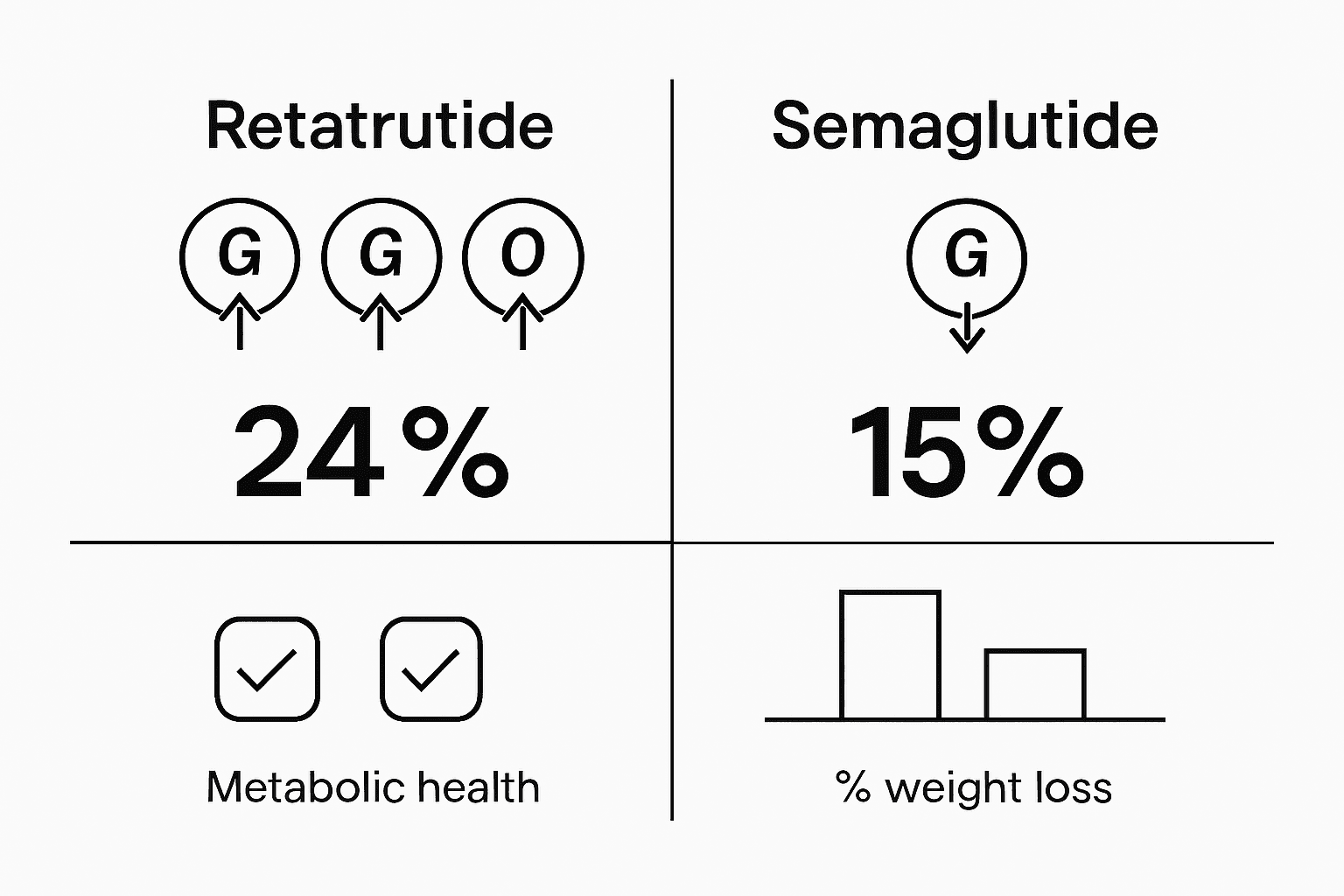
When comparing Retatrutide to contemporaries like tirzepatide and semaglutide, the distinctions become remarkably clear. Comprehensive comparative studies demonstrate that by targeting GLP-1, GIP, and glucagon receptors simultaneously, Retatrutide achieves more comprehensive metabolic modulation. This multi-receptor approach translates to potentially greater weight loss outcomes, more significant improvements in glycemic control, and more nuanced metabolic regulation compared to peptides targeting fewer receptors.
The scientific community is particularly intrigued by Retatrutide’s enhanced efficacy profile. Preliminary data suggests weight loss percentages that surpass existing therapies, with more consistent metabolic improvements across diverse patient populations. The compound’s ability to interact with three distinct receptors means a more holistic approach to metabolic health, potentially offering women a more dynamic and responsive treatment option for weight management and metabolic syndrome.
Here’s a concise comparison of Retatrutide against other leading peptide therapies:
| Peptide Name | Targeted Receptors | Expected Weight Loss (%) | Key Metabolic Impact |
|---|---|---|---|
| Retatrutide | GLP-1, GIP, Glucagon | 15–25 | Improved glycemic control, broad metabolic effects |
| Tirzepatide | GLP-1, GIP | 10–20 | Enhanced glucose metabolism |
| Semaglutide | GLP-1 | 10–15 | Primary appetite regulation |
Pro Comparison Insight: Always consult healthcare professionals to understand how individual metabolic profiles might interact with specific peptide therapies, recognizing that personalized medical guidance remains paramount in treatment selection.
Discover How Retatrutide Trials Connect to Your Wellness Journey
Women exploring the promising potential of Retatrutide’s stage 3 clinical trials face challenges like understanding innovative peptide science, managing metabolic health risks, and seeking safe, effective weight management solutions. This article highlights critical concepts such as triple-receptor agonists, glycemic control, and metabolic transformation—all important for women aiming to regain confidence and vitality through balanced, informed care.
At EmilySandersLifestyle.com, we embrace this journey by blending educational insights with calm, approachable wellness content focused on modern feminine self-care. Whether you are curious about peptide fundamentals or want to enrich your balanced living routine with trusted information, our platform supports your goals with beginner-friendly explanations and lifestyle tips that promote glow and confidence.

Step confidently into this new era of metabolic wellness with resources tailored just for you. Visit our site now to explore how understanding peptides like Retatrutide can complement your self-care rituals. Start learning and glowing today by visiting Emily Sanders Lifestyle. Your path to balance and knowledge begins here.
Frequently Asked Questions
What is Retatrutide and how does it work?
Retatrutide is a triple-receptor agonist that targets GLP-1, GIP, and glucagon receptors to create a comprehensive metabolic response. Its mechanism enhances satiety signals, reduces hunger sensations, and increases energy expenditure.
What can participants expect in Stage 3 clinical trials for Retatrutide?
Participants in Stage 3 trials can expect rigorous evaluation of Retatrutide’s effectiveness on various metabolic health conditions, including obesity and type 2 diabetes, monitored through detailed medical assessments and regular check-ins.
What are the potential benefits of Retatrutide for women struggling with weight management?
Retatrutide has shown potential for significant weight loss (15–25% reduction) and improvements in metabolic health markers such as fasting plasma glucose and cholesterol levels, making it a promising option for women facing weight-related health challenges.
Are there any side effects associated with Retatrutide?
Common side effects of Retatrutide primarily include gastrointestinal issues such as mild to moderate nausea, vomiting, and diarrhea, particularly during initial treatment phases. Most side effects are transient and manageable as the body adjusts to the peptide.
Recommended
- Retatrutide: Complete Guide to Triple‑Agonist Peptide – EMILY SANDERS LIFESTYLE
- Best 5 Retatrutide Over Monjaro – Expert Comparison 2025 – EMILY SANDERS LIFESTYLE
- PT-141 Explained: Uses, Benefits, and Safety – EMILY SANDERS LIFESTYLE
- Wellness Trends for Women 2025: Complete Guide – EMILY SANDERS LIFESTYLE
0 reacties