
Finding beauty and balance can feel challenging when global studies show over 60 percent of American women are frustrated by impulsive purchases that clash with their wellness goals. This reality matters for anyone focusing on mindful shopping, self-care, and sustainability. Here you will discover how to outsmart common myths, embrace intentional choices, and align your personal style with a more conscious and rewarding approach to every purchase.
Table of Contents
- Meaning Of Mindful Shopping And Common Myths
- Key Principles Of Mindful Buying Decisions
- Sustainable Fashion And Ethical Retail Options
- How Mindful Shopping Supports Beauty Routines
- Avoiding Impulse Purchases And Reducing Waste
Key Takeaways
| Point | Details |
|---|---|
| Mindful Shopping Defined | Mindful shopping focuses on intentional purchasing and aligning purchases with personal values and long-term goals. |
| Myth Busting | It is a misconception that mindful shopping requires buying nothing or only considering expensive items; every purchase benefits from careful thought. |
| Financial and Personal Benefits | Prioritizing needs, budgeting intentionally, and researching before buying lead to better financial decisions and reduced stress. |
| Sustainable Choices | Supporting sustainable and ethical brands can transform purchasing habits and contribute to personal well-being and environmental responsibility. |
Meaning Of Mindful Shopping And Common Myths
Mindful shopping represents a conscious approach to consumption that goes beyond traditional purchasing behaviors. It involves making deliberate, informed decisions about what you buy, why you buy, and how those purchases align with your personal values and long-term goals. Conscious consumer practices fundamentally challenge impulsive buying patterns by encouraging deeper awareness of marketing strategies and personal spending motivations.
At its core, mindful shopping is about resisting manipulative marketing tactics and understanding the emotional and psychological triggers that drive consumer behavior. Most people assume shopping is a straightforward transaction, but it’s actually a complex interaction between personal desires, societal influences, and strategic corporate messaging. Purchasing decisions involve attention and self-regulation skills that can be developed and refined over time, transforming how we approach consumption.
Several persistent myths surround mindful shopping that deserve debunking:
- Myth 1: Mindful shopping means buying nothing
- Myth 2: Only expensive purchases require careful consideration
- Myth 3: Sales and discounts are always beneficial
- Myth 4: Online shopping is inherently more rational than in-store shopping
These misconceptions often prevent people from developing a truly intentional relationship with their purchasing habits. Mindful shopping isn’t about deprivation but about making choices that reflect personal values, support sustainable practices, and create genuine satisfaction beyond momentary impulse.
Here’s a comparison of common myths about mindful shopping and the reality behind each:
| Myth | Reality | Impact on Consumer Behavior |
|---|---|---|
| Buying nothing is required | Intentional purchasing is key | Encourages thoughtful consumption |
| Only costly items need thought | All purchases benefit from planning | Promotes wise everyday decisions |
| Sales always mean savings | Discounts can trigger impulse buys | May increase spending, not savings |
| Online shopping is more rational | Both online and in-store purchases involve emotion | Critical thinking is needed everywhere |
Pro tip: Start tracking your purchases for one month, noting emotional triggers and actual utility of items to develop deeper self-awareness about your shopping patterns.
Key Principles Of Mindful Buying Decisions
Mindful buying decisions are rooted in strategic planning and self-awareness. Creating a comprehensive buying plan serves as the foundational approach to transforming consumer behavior. This methodology involves carefully evaluating personal needs, understanding financial constraints, and developing a deliberate strategy that transcends impulse purchasing.
The core principles of mindful buying revolve around several key strategies:
- Prioritize Needs Over Wants: Distinguish between essential purchases and desire-driven acquisitions
- Research Thoroughly: Compare product features, prices, and long-term value before committing
- Understand Marketing Tactics: Critically evaluate product positioning and promotional strategies
- Budget Intentionally: Allocate funds with clear purpose and financial sustainability
- Assess Long-Term Impact: Consider the environmental and personal economic consequences of purchases
Successful mindful buying requires developing a nuanced approach to consumption. It’s not about complete restriction but about making informed choices that align with personal values, financial goals, and genuine utility. By implementing these principles, consumers can transform shopping from an impulsive activity into a deliberate, empowering process that supports personal growth and financial wellness.

Below is a summary of how mindful shopping principles contribute to financial and personal wellness:
| Principle | Financial Benefit | Personal Benefit |
|---|---|---|
| Needs over wants | Reduces unnecessary spending | Lowers clutter and stress |
| Thorough research | Secures best value for money | Builds confidence and satisfaction |
| Marketing awareness | Avoids promotional traps | Encourages informed decisions |
| Budgeting | Improves long-term savings | Instills discipline and control |
| Long-term impact | Prevents future regrets | Supports sustainability goals |
Pro tip: Create a 24-hour waiting period for any non-essential purchase over $50 to reduce impulse buying and increase intentional decision-making.
Sustainable Fashion And Ethical Retail Options
Sustainable fashion represents a transformative approach to clothing consumption that goes far beyond aesthetic choices. Sustainable fashion integrates environmental and social responsibility throughout the entire production lifecycle, challenging traditional retail paradigms. This approach demands a holistic perspective that considers the ecological footprint, worker welfare, and long-term economic implications of every garment.
The core elements of sustainable and ethical fashion include multiple critical dimensions:
- Material Sourcing: Prioritizing organic, recycled, and low-impact textiles
- Production Ethics: Ensuring fair wages and safe working conditions
- Waste Reduction: Implementing circular design principles
- Transparency: Providing clear information about manufacturing processes
- Carbon Footprint: Minimizing environmental impact through responsible manufacturing
Ethical retail options demand comprehensive sustainability strategies that address systemic challenges in the fashion industry. This means moving beyond superficial marketing claims and developing genuine commitments to environmental stewardship and social responsibility. Consumers play a crucial role by supporting brands that demonstrate authentic dedication to these principles, thereby driving meaningful industry transformation.
Pro tip: Research brands using free sustainability scorecards and apps that rate fashion companies based on their environmental and ethical practices before making purchasing decisions.
How Mindful Shopping Supports Beauty Routines
Mindful shopping transforms beauty routines from impulsive purchasing to intentional self-care. Conscious consumer choices in beauty products prioritize quality, ethical production, and personal wellness over temporary trends. This approach encourages individuals to view beauty products as investments in both personal health and broader environmental sustainability.
Key strategies for integrating mindful shopping into beauty routines include:
- Quality Over Quantity: Select fewer, higher-quality products
- Ingredient Awareness: Research product compositions and potential health impacts
- Ethical Brand Selection: Support companies with transparent production practices
- Multi-Purpose Products: Choose versatile items that reduce overall consumption
- Long-Term Performance: Evaluate products based on sustained results, not immediate promises
Consumer purchase intentions in cosmetics demonstrate that thoughtful buyers prioritize trust and authentic brand messaging. This means moving beyond marketing hype and developing a critical understanding of product claims, ingredients, and potential long-term effects on personal wellness and environmental sustainability.
Pro tip: Create a personal beauty product inventory to track usage, expiration dates, and prevent unnecessary purchases that contribute to waste.
Avoiding Impulse Purchases And Reducing Waste
Impulse buying represents a significant challenge for conscious consumers seeking to create sustainable wardrobes. Psychological factors driving unplanned purchases reveal complex emotional triggers that prompt individuals to make spontaneous shopping decisions. These impulses often stem from marketing strategies designed to exploit psychological vulnerabilities, creating a cycle of unnecessary consumption that ultimately contributes to personal waste and environmental strain.
Strategic approaches to combating impulse purchasing include:
- Emotional Awareness: Recognize and pause before emotionally driven purchases
- Financial Tracking: Monitor spending patterns and identify recurring impulse triggers
- Waiting Period: Implement a 24-48 hour reflection window before making non-essential purchases
- Budget Boundaries: Establish clear spending limits and categorize expenses
- Digital Detox: Limit exposure to targeted online advertisements
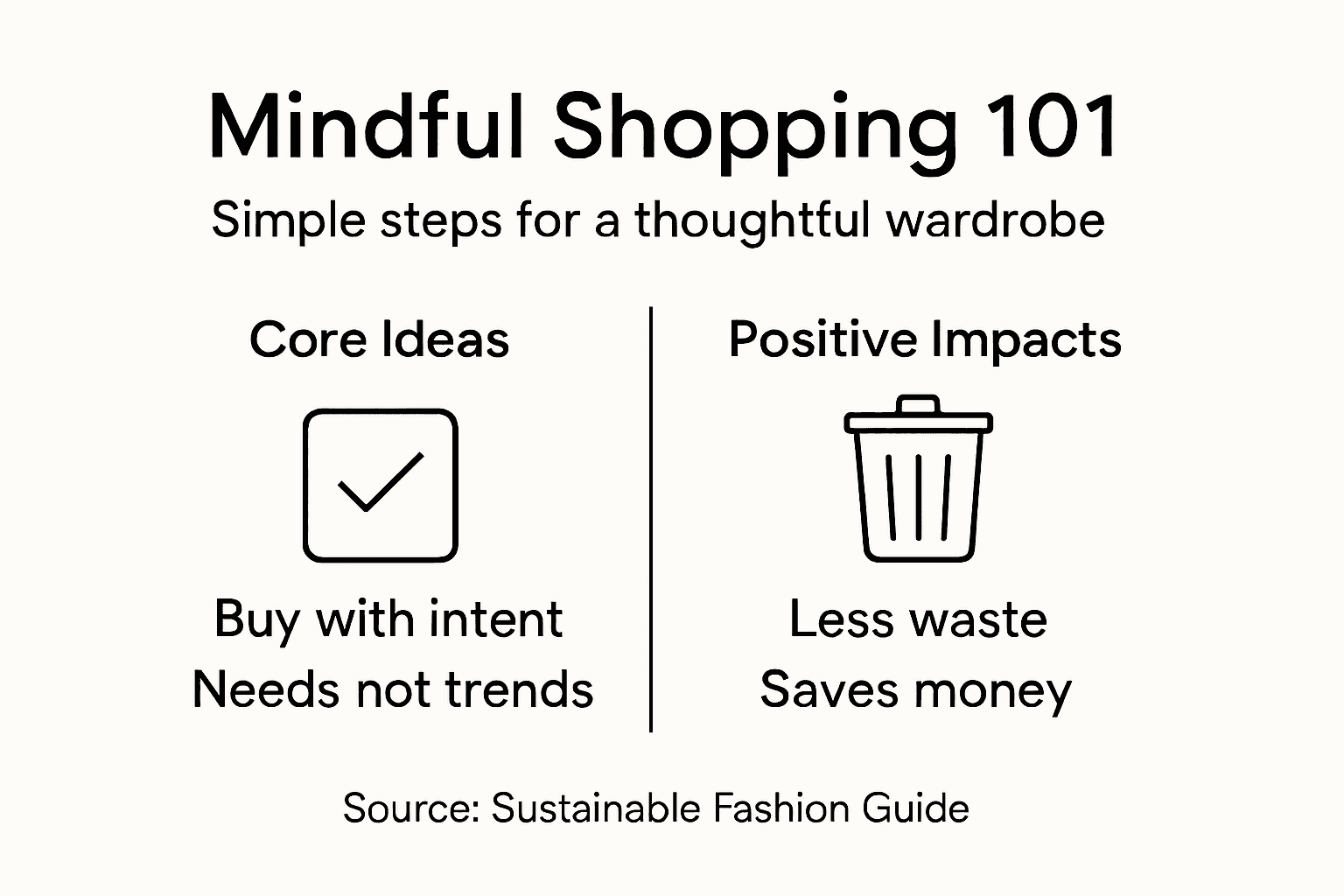
Waste reduction strategies emphasize the importance of intentional consumption. By understanding the environmental consequences of uncontrolled purchasing, consumers can transform their relationship with shopping from a reactive to a proactive process. This shift requires developing critical thinking skills that prioritize long-term value over momentary gratification.
Pro tip: Create a digital wishlist and review items after 30 days to determine if they remain genuinely necessary or were merely temporary desires.
Embrace Mindful Shopping to Transform Your Wardrobe and Lifestyle
Are you ready to break free from impulse purchases and build a wardrobe that truly reflects your values and style? This article highlights how mindful shopping involves intentional choices that reduce waste and increase satisfaction through thoughtful spending. If you struggle with identifying needs versus wants or feel overwhelmed by fast fashion trends, discover practical, elegant solutions tailored to modern feminine self-care at EmilySandersLifestyle.com. Here you will find curated style essentials and balanced living routines designed to enhance confidence and glow without compromising your ethics or budget.

Start your journey today by exploring simple steps to refine your shopping habits and embrace ethical fashion that supports sustainability and personal wellness. Visit Emily Sanders Lifestyle for calm, educational content that makes mindful buying approachable and rewarding. Don’t wait to experience how intentional choices can elevate your beauty routines and wardrobe, helping you live a more purposeful and joyful life.
Frequently Asked Questions
What is the definition of mindful shopping?
Mindful shopping is a conscious approach to consumption that involves making deliberate and informed decisions about purchases, ensuring they align with personal values and long-term goals.
How can I start implementing mindful shopping in my daily life?
Begin by tracking your purchases for a month to identify emotional triggers and assess the true utility of items. Prioritize needs over wants, and create a budget to guide your spending.
What are some common myths about mindful shopping?
Common myths include the belief that mindful shopping requires buying nothing, that only expensive purchases need careful consideration, and that sales always lead to savings. These can hinder the development of intentional purchasing habits.
How does mindful shopping contribute to sustainable fashion?
Mindful shopping promotes sustainable fashion by encouraging consumers to consider the environmental and social implications of their purchases, prioritizing ethical brands and sustainable materials over fast fashion trends.
0 reacties