
Finding trustworthy strategies for staying vibrant and confident can feel confusing when so many myths about aging still circulate. It matters because outdated beliefs can limit your view of what is possible as you approach new chapters in life. By embracing an ageless lifestyle grounded in science and self-care, you unlock pathways to healthier skin, more energy, and lasting well-being—no matter your chronological age.
Table of Contents
- Defining Ageless Lifestyle and Common Myths
- Core Principles of Ageless Living Today
- Peptides’ Role in Healthy Aging
- Habits and Routines That Support Longevity
- Risks, Mistakes, and Safe Practices
Key Takeaways
| Point | Details |
|---|---|
| Holistic Wellness Approach | Embrace an ageless lifestyle that prioritizes physical health, mental resilience, and social connections for optimal aging. |
| Myth-Busting Aging Perceptions | Challenge common myths about aging to unlock your potential for growth and creativity at any age. |
| Peptides for Wellness | Utilize peptides thoughtfully, ensuring professional guidance to enhance physiological resilience and health. |
| Intentional Longevity Practices | Adopt strategic lifestyle choices, such as regular exercise and mindful nutrition, to facilitate sustainable aging and well-being. |
Defining Ageless Lifestyle and Common Myths
The concept of an ageless lifestyle represents more than just fighting physical aging—it’s a holistic approach to wellness that challenges traditional perspectives about getting older. Modern science reveals that aging isn’t a predetermined decline, but a dynamic process influenced by our choices, mindset, and daily habits. Aging research challenges demonstrate that chronological age doesn’t dictate capability or potential.
Many persistent myths about aging continue to shape societal perceptions, limiting how individuals view their potential. Common misconceptions include believing that cognitive decline is inevitable, physical activity becomes impossible, or creativity diminishes with age. These narratives are not only inaccurate but potentially harmful, creating self-imposed limitations that restrict personal growth and wellness. In reality, individuals can maintain robust mental and physical capabilities well into later decades by adopting proactive lifestyle strategies.
Here’s how common aging myths compare to current scientific understanding:
| Aging Myth | Scientific Reality | Impact on Lifestyle |
|---|---|---|
| Cognitive decline is inevitable | Brain plasticity can last for decades | Encourages lifelong learning |
| Physical activity is unsafe for older adults | Regular exercise is beneficial with proper guidance | Promotes active aging |
| Creativity decreases with age | Creativity can flourish with experience | Motivates creative pursuits |
| Chronological age limits potential | Abilities vary by individual, not age | Supports goal setting at any stage |
An ageless lifestyle encompasses multiple dimensions: maintaining physical health through nutrition and exercise, cultivating mental resilience, pursuing continuous learning, and nurturing social connections. It’s about understanding that aging is a natural progression where wisdom, experience, and personal development take center stage. Individual aging trajectories vary dramatically, proving that chronological age is just a number, not a definition of potential.
Pro tip: Start reframing your perspective on aging by celebrating your accumulated wisdom and experiences rather than focusing on perceived limitations.
Core Principles of Ageless Living Today
Modern approaches to ageless living recognize that wellness is a multidimensional journey involving intentional lifestyle choices. Healthy lifestyle factors represent more than mere survival strategies—they are proactive pathways to maintaining vitality, resilience, and quality of life throughout our entire lifespan. This holistic perspective shifts away from viewing aging as decline and instead frames it as an opportunity for continuous personal growth and optimization.
The core principles of ageless living encompass several key dimensions. Physical health remains fundamental, involving consistent exercise, nutritious diet, and strategic self-care. Mental wellness equally matters, requiring ongoing cognitive engagement, stress management, and emotional intelligence. Extending healthspan principles suggest that maintaining intellectual curiosity and social connections are as critical as physical maintenance. These interconnected strategies work synergistically to support overall well-being.
Beyond individual practices, ageless living demands a transformative mindset. It means embracing change, continuously learning, and viewing challenges as opportunities for adaptation. Successful aging isn’t about resisting time, but about developing resilience, maintaining flexibility—both physical and mental—and cultivating a sense of purpose that transcends chronological age. By integrating mindful practices, nutritional intelligence, and proactive healthcare, individuals can design a lifestyle that supports lasting vitality.
Pro tip: Create a personal wellness vision board that visualizes your ideal ageless lifestyle, incorporating physical, mental, and social goals to maintain motivation and direction.
Peptides’ Role in Healthy Aging
Peptides represent a groundbreaking frontier in understanding and supporting the aging process, offering sophisticated molecular strategies for maintaining vitality. Cellular repair mechanisms demonstrate how these tiny protein fragments can potentially interrupt and redirect age-related decline, functioning as precise biological communicators that influence cellular health and regeneration.

At the molecular level, peptides work through complex signaling pathways that target multiple dimensions of aging. These biological messengers can modulate inflammation, support tissue regeneration, and optimize metabolic processes. Longevity signaling pathways reveal how peptides interact with cellular systems, potentially mitigating oxidative stress and supporting more resilient physiological responses. By acting as intelligent intermediaries, peptides help cells communicate more effectively and respond more adaptively to environmental challenges.
The strategic potential of peptides extends beyond simple interventional approaches. They represent a nuanced understanding of aging as a dynamic, adaptable process rather than an inevitable decline. Peptides can potentially influence hormone regulation, immune function, and cellular repair mechanisms, offering a multifaceted approach to maintaining physiological resilience. This perspective transforms aging from a passive experience to an active, manageable journey of continuous biological optimization.
Pro tip: Consult with wellness professionals who specialize in peptide research to develop a personalized approach that aligns with your unique physiological profile and health objectives.
Habits and Routines That Support Longevity
Longevity is not a matter of chance but a deliberate outcome of consistent, strategic lifestyle choices. Healthy lifestyle factors reveal that our daily habits profoundly impact our biological aging process. These choices extend far beyond genetic predispositions, offering a powerful framework for individuals to actively manage their health trajectory and potential lifespan.
Comprehensive wellness requires a holistic approach that integrates multiple dimensions of health. Physical activity stands as a cornerstone, with consistent exercise promoting cardiovascular strength, metabolic efficiency, and cellular resilience. Nutritional strategies play an equally critical role, emphasizing whole foods, balanced macronutrients, and micronutrient density. Lifestyle choices over genetics demonstrate that mindful nutrition and regular movement can dramatically influence long-term health outcomes, potentially overriding genetic risk factors.
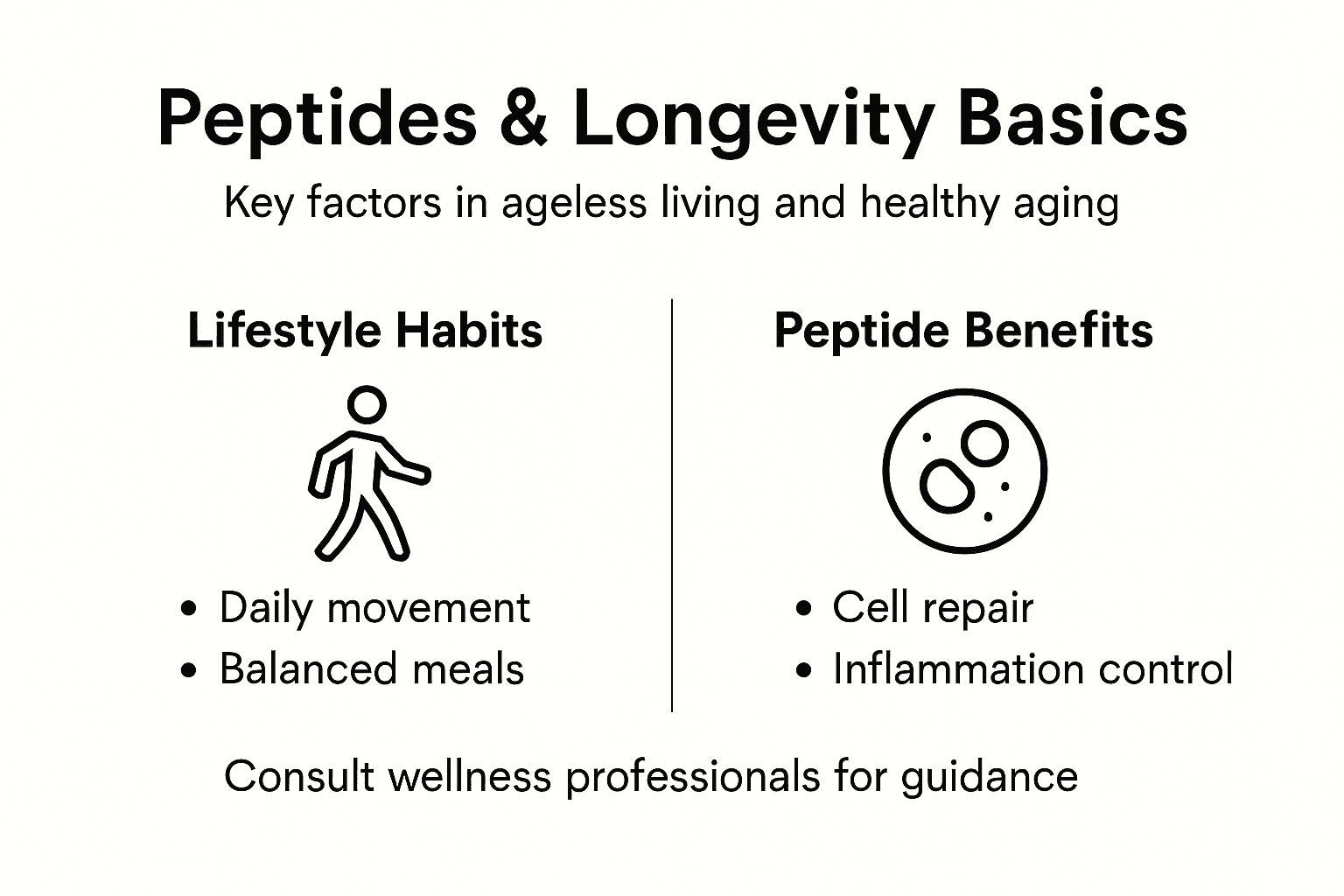
Mental and emotional wellness are equally fundamental to sustainable longevity. Stress management techniques, consistent sleep patterns, and meaningful social connections create a robust physiological foundation. Practices such as meditation, mindfulness, and continuous learning help maintain cognitive flexibility and emotional equilibrium. By understanding longevity as a dynamic, interactive process, individuals can design personalized routines that support biological optimization, transforming aging from a passive experience into an intentional, empowering journey.
Pro tip: Create a weekly wellness tracker that integrates physical, nutritional, mental, and social health metrics to monitor and adjust your longevity-supporting habits.
Risks, Mistakes, and Safe Practices
Navigating peptide-related wellness requires a nuanced, informed approach that prioritizes individual safety and personalized understanding. Peptide exploration demands careful consideration, recognizing that each person’s physiological landscape is unique. While peptides offer promising wellness potential, uninformed or unguided implementation can lead to unintended consequences that compromise overall health objectives.
Key risks in peptide wellness include potential misalignment with individual metabolic profiles, inappropriate dosage strategies, and lack of comprehensive health context. Individuals often make critical mistakes such as self-administering without professional guidance, overlooking potential interactions with existing medications, or expecting instantaneous transformative results. These approaches can create physiological stress, disrupt natural biological processes, and potentially generate unexpected health complications.
Safe peptide practices necessitate a holistic, methodical approach. This involves comprehensive health assessments, professional consultation, gradual implementation, and consistent monitoring. Critical elements include understanding personal health history, working with qualified wellness professionals, conducting thorough baseline health evaluations, and maintaining transparent communication about supplement interactions. Responsible peptide integration means viewing these molecular compounds as sophisticated biological tools requiring precision, respect, and individualized strategic planning.
Below is a summary of safe and unsafe practices in peptide wellness:
| Practice Type | Example | Potential Outcome |
|---|---|---|
| Safe Practice | Professional health assessment | Personalized peptide plan |
| Safe Practice | Regular monitoring by expert | Reduced side effects |
| Unsafe Practice | Self-administering peptides | Increased health risks |
| Unsafe Practice | Ignoring medical history | Unintended complications |
Pro tip: Consult a wellness professional specializing in peptide protocols to develop a personalized, safety-first approach tailored to your unique physiological requirements.
Discover How Peptides Can Transform Your Ageless Lifestyle Today
Maintaining lasting vitality while embracing an ageless lifestyle requires more than just good habits. It demands an intentional approach that combines cutting-edge peptide science with wellness practices proven to support cellular health, mental resilience, and physical performance. This article has highlighted how peptides serve as powerful biological communicators that help your body repair, regenerate, and adapt to aging dynamically. Those seeking to overcome common aging myths and unlock their potential will find peptide-infused routines especially valuable.
Explore our curated Wellness collection designed to complement your peptide journey. Whether it is enhancing skin health or supporting metabolic balance, integrating peptide education and peptide-based products can amplify your long-term vitality.
Ready to take control of your aging narrative with confidence? Visit Emily Sanders Lifestyle to dive deeper into tailored peptide solutions and elevate your wellness routine. Start your transformation now by exploring our Sport and Yoga essentials for balanced physical vitality paired with peptide support. Your ageless lifestyle is within reach. Act today to make lasting wellness your new reality.
Frequently Asked Questions
What is an ageless lifestyle?
An ageless lifestyle is a holistic approach to wellness that focuses on maintaining vitality, mental resilience, and personal growth throughout all stages of life, challenging traditional perceptions of aging.
How do peptides support healthy aging?
Peptides support healthy aging by acting as biological messengers that influence cellular health, modulate inflammation, and optimize metabolic processes, aiding in tissue regeneration and overall vitality.
What are some key habits for promoting longevity?
Key habits for promoting longevity include regular physical activity, a nutritious diet rich in whole foods, mental engagement through continuous learning, stress management, and fostering meaningful social connections.
What risks are associated with peptide use?
Risks associated with peptide use include potential misalignment with individual metabolic profiles, inappropriate dosing, and lack of professional guidance, which can lead to unintended health complications.
Recommended
- Peptide Explained: Skincare, Health, and Ageless Glow – EMILY SANDERS LIFESTYLE
- Peptides 2026: Skincare Breakthroughs and Ageless Glow – EMILY SANDERS LIFESTYLE
- Benefits of Peptides: Complete Wellness and Glow Guide – EMILY SANDERS LIFESTYLE
- Are Peptides Right for You? Skincare, Wellness & Beyond – EMILY SANDERS LIFESTYLE
0 comments