
Over 60 percent of American consumers now seek out skincare products labeled with advanced peptide technology. This growing interest reflects a shift in how people approach anti-aging and skin health, as peptides promise targeted results with scientific backing. Discovering what peptides do and how they interact with your skin can help you make smarter choices for a healthy, youthful complexion backed by the latest American skincare science.
Table of Contents
- Defining Peptides And Their Skincare Role
- Leading Peptide Types In 2026 Beauty
- How Peptides Support Ageless, Glowing Skin
- Potential Risks And Safe Peptide Use
- Choosing Quality Peptides For Wellness
Key Takeaways
| Point | Details |
|---|---|
| Understanding Peptides | Peptides are crucial for youthful skin, signaling cellular repair and boosting collagen production. Incorporating peptide-rich products can enhance skin vitality. |
| Advanced Peptide Types | 2026 is seeing innovative peptides like Copper, Signal, and Neurotransmitter Peptides that address specific skin concerns effectively. Multi-peptide formulations are preferable for comprehensive care. |
| Safety Considerations | Always perform patch tests and choose scientifically validated peptide products to minimize the risk of irritation or adverse reactions. Consult professionals for tailored advice on peptide usage. |
| Selecting Quality Products | Focus on molecular purity and independent testing when choosing peptide products to ensure efficacy and safety. This approach supports targeted skin wellness. |
Defining Peptides and Their Skincare Role
Peptides represent sophisticated molecular messengers in skincare, serving as essential building blocks for maintaining youthful and resilient skin. These microscopic amino acid chains function like precision cellular communicators, signaling skin cells to perform critical regenerative tasks. Understanding how peptides interact with our skin can revolutionize our approach to understanding skincare strategies.
At their core, peptides are short protein fragments composed of amino acids that act as biological triggers within skin tissue. Research from aesthetic nursing professionals highlights their multifaceted benefits, including anti-aging, antimicrobial, and antioxidant properties. They uniquely communicate with skin cells, instructing them to generate more collagen, repair damage, and enhance overall skin structure and resilience.
Skin naturally produces fewer peptides as we age, which contributes to reduced elasticity and visible signs of aging. By strategically incorporating peptide-rich skincare products, individuals can help stimulate the skin’s natural regeneration processes. Different peptide types target specific concerns - some encourage collagen production, while others support skin hydration or reduce inflammation.
Pro Tip: Skin Peptide Strategy: Select peptide-based serums or moisturizers and apply consistently, preferably during evening skincare routines when cellular repair is most active, to maximize potential regenerative benefits.
Key Peptide Functions in Skincare:
- Signal cellular repair mechanisms
- Boost collagen synthesis
- Enhance skin elasticity
- Reduce inflammation
- Support natural skin microbiome
Leading Peptide Types in 2026 Beauty
The beauty landscape in 2026 is witnessing a remarkable transformation with advanced peptide technologies that go far beyond traditional skincare approaches. Cutting-edge peptide research is revealing sophisticated molecular strategies that promise unprecedented skin rejuvenation and targeted cellular repair.
Copper peptides are emerging as frontrunners in the skincare revolution, with multi-functional formulations designed to address complex skin concerns. Advanced peptide blends are now engineered to perform intricate tasks like stimulating collagen production, enhancing wound healing, and providing comprehensive anti-aging benefits. These innovative peptides act as intelligent biological messengers, communicating directly with skin cells to trigger precise regenerative mechanisms.
The most promising peptide types in 2026 include signal peptides, carrier peptides, neurotransmitter peptides, and enzyme-inhibitor peptides. Each category offers unique advantages: signal peptides communicate cellular repair instructions, carrier peptides transport essential minerals like copper, neurotransmitter peptides mimic muscle-relaxing effects similar to topical treatments, and enzyme-inhibitor peptides help prevent collagen breakdown.
Pro Tip: Peptide Selection Strategy: When choosing peptide-based products, prioritize multi-peptide formulations that offer comprehensive skin benefits and match your specific skin concerns, ensuring targeted and effective skincare.
Leading Peptide Categories in 2026:
Here’s a concise comparison of key peptide categories and their primary skincare roles:
| Peptide Type | Main Action | Typical Use Case |
|---|---|---|
| Signal Peptides | Stimulate cell regeneration | Anti-aging, wrinkle reduction |
| Carrier Peptides | Deliver trace elements | Collagen support, healing |
| Neurotransmitter Peptides | Relax facial muscles | Smoothing fine lines |
| Enzyme-Inhibitor Peptides | Prevent collagen breakdown | Firmness, slow aging processes |
- Signal Peptides
- Carrier Peptides
- Neurotransmitter Peptides
- Enzyme-Inhibitor Peptides
- Advanced Copper Peptide Blends
How Peptides Support Ageless, Glowing Skin
Achieving ageless, radiant skin is no longer a distant dream but a scientific reality through advanced peptide technologies. Signal peptides stimulate critical skin regeneration processes, targeting the fundamental mechanisms that maintain youthful appearance and skin resilience. These molecular messengers work at the cellular level, communicating intricate instructions for repair and renewal.
The regenerative power of peptides extends far beyond surface-level improvements. Aesthetic research demonstrates their comprehensive approach to skin health, offering antimicrobial, antioxidant, and collagen-boosting benefits. Carrier peptides play a crucial role by delivering essential trace elements like copper, which accelerates healing and supports robust collagen production, ultimately contributing to a more luminous and resilient complexion.
Understanding the specific mechanisms of peptides reveals their remarkable potential. Different peptide types target various aspects of skin aging: neurotransmitter peptides can relax facial muscles, reducing the appearance of fine lines, while enzyme-inhibitor peptides prevent collagen breakdown. This multi-dimensional approach ensures comprehensive skin rejuvenation, addressing not just the symptoms of aging but its underlying cellular processes.

Pro Tip: Peptide Application Strategy: Layer peptide serums under moisturizers and apply consistently, focusing on gentle patting motions to enhance absorption and maximize cellular communication.
Peptide Skin Benefits:
- Stimulate collagen production
- Improve skin elasticity
- Support natural microbiome
- Reduce inflammation
- Enhance cellular repair mechanisms
Potential Risks and Safe Peptide Use
Navigating the world of peptide skincare requires a nuanced understanding of potential risks and safety protocols. Recent regulatory changes have transformed cosmetic safety standards, particularly with the FDA’s Modernization of Cosmetics Regulation Act, mandating more rigorous evaluation of skin penetration, product stability, and potential allergen identification in peptide formulations.
The scientific complexity of peptides demands careful consideration of their interaction with human biology. Research highlights critical safety parameters including potential immunogenicity, skin penetration mechanisms, and long-term stability. Some peptides may trigger unexpected immune responses or cause mild skin irritation, especially for individuals with sensitive skin or pre-existing dermatological conditions. Understanding individual skin sensitivity and conducting patch tests become paramount in responsible peptide usage.
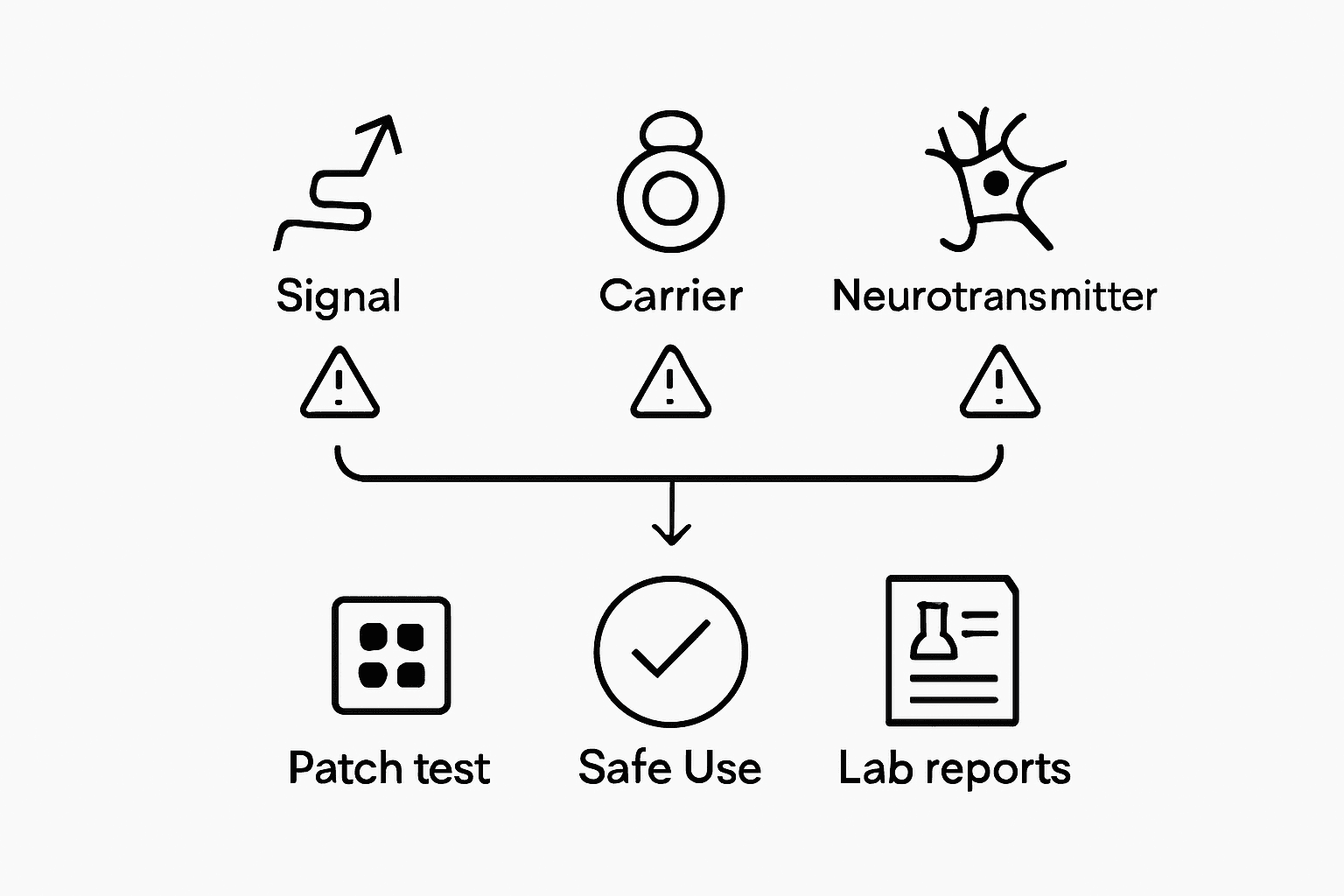
Peptide safety is not a one-size-fits-all approach. Different peptide types present varying risk profiles: neurotransmitter peptides might interact differently with skin compared to signal or carrier peptides. Factors like molecular weight, peptide sequence, and concentration significantly impact potential skin reactions. Professional consultation and gradual introduction of peptide products can help mitigate potential adverse effects and ensure optimal skin tolerance.
Pro Tip: Peptide Sensitivity Check: Perform a 24-hour patch test on a small skin area before fully incorporating any new peptide product into your skincare routine, watching for redness, itching, or unusual skin reactions.
Peptide Safety Considerations:
- Conduct individual patch tests
- Start with lower concentration formulations
- Monitor skin reactions
- Consult dermatological professionals
- Choose scientifically validated peptide products
Choosing Quality Peptides for Wellness
Selecting high-quality peptides requires a strategic approach that goes beyond surface-level marketing claims. The world of peptide wellness demands scientific precision and targeted understanding of individual skin needs. Each peptide type offers unique molecular communication strategies designed to address specific skin concerns and cellular regeneration processes.
The fundamental criteria for peptide quality encompass multiple critical factors. Research demonstrates that superior peptides deliver comprehensive skin transformation, targeting texture improvement, wrinkle reduction, skin barrier repair, and overall resilience. Discerning consumers should evaluate peptide formulations based on molecular complexity, proven research backing, purity levels, and specific targeted benefits rather than generic anti-aging promises.
Different peptide categories serve distinct wellness objectives. Signal peptides excel at collagen stimulation, carrier peptides transport essential minerals, neurotransmitter peptides address muscle tension, and enzyme-inhibitor peptides prevent cellular degradation. Understanding these nuanced differences allows individuals to select peptide products that align precisely with their unique skin health goals and cellular regeneration needs.
Pro Tip: Peptide Selection Method: Research product certificates of analysis, verify independent laboratory testing results, and prioritize peptide formulations with transparent ingredient sourcing and documented clinical research.
Quality Peptide Selection Criteria:
To help you evaluate peptide product quality, see how top selection criteria align with skin wellness needs:
| Selection Criterion | Why It Matters | Wellness Benefit |
|---|---|---|
| Molecular Purity | Reduces risk of irritation | Supports sensitive skin |
| Scientific Validation | Ensures proven efficacy | Reliable skin improvements |
| Independent Testing | Confirms safety and truth in claims | Minimizes adverse reactions |
| Transparent Sourcing | Shows ingredient integrity | Trustworthy product selection |
- Molecular purity
- Scientifically validated research
- Specific targeted benefits
- Independent laboratory testing
- Transparent ingredient sourcing
Unlock the Power of Peptides for Your Ageless Glow Today
The challenge of aging skin is real and personal Peptides are your skin’s natural messengers signaling repair and renewal yet their natural decline leads to loss of elasticity and visible signs of aging If you want to boost collagen, reduce fine lines, and support your skin’s resilience understanding advanced peptides like signal, carrier, and neurotransmitter peptides is key EmilySandersLifestyle.com offers a gentle introduction to these transformative skincare essentials helping you confidently incorporate peptides into your routine with beginner-friendly guidance and refined wellness advice

Experience the breakthrough in modern skincare by embracing scientifically validated peptide products that truly revitalize your skin Take charge of your youthful glow and explore our curated insights that blend calm education with elegant self-care Start your journey to radiant skin now by visiting EmilySandersLifestyle.com Dive deeper into how peptides work and choose quality formulations that suit your unique skin needs with ease Learn more about maintaining your glow with confidence and clarity at EmilySandersLifestyle.com and discover resources that make skincare breakthroughs accessible and effective
Frequently Asked Questions
What are peptides and how do they benefit my skin?
Peptides are short chains of amino acids that function as cellular messengers. They help signal skin cells to perform critical tasks like boosting collagen production, repairing damage, and reducing inflammation, ultimately contributing to youthful and resilient skin.
How can I effectively incorporate peptides into my skincare routine?
To maximize the benefits of peptide-rich products, select serums or moisturizers that contain a variety of peptides. Apply them consistently, preferably during your evening skincare routine, to take advantage of the regenerative processes that occur while you sleep.
What are the different types of peptides found in skincare products?
The main types of peptides in skincare include signal peptides, which stimulate cell regeneration; carrier peptides that deliver essential nutrients; neurotransmitter peptides that help relax facial muscles; and enzyme-inhibitor peptides that prevent collagen breakdown, helping to maintain firmness and elasticity.
Are there any risks associated with using peptide skincare products?
While peptides are generally safe, some individuals may experience skin irritation or allergic reactions. It’s advisable to conduct a patch test before full application, start with lower concentrations, and consult a dermatologist if you have sensitive skin or a history of allergic reactions.
Recommended
- Peptide Explained: Skincare, Health, and Ageless Glow – EMILY SANDERS LIFESTYLE
- Why Peptides Are Revolutionizing Modern Skincare – EMILY SANDERS LIFESTYLE
- Benefits of Peptides: Complete Wellness and Glow Guide – EMILY SANDERS LIFESTYLE
- GHK-Cu Benefits: Ageless Skin and Cellular Renewal – EMILY SANDERS LIFESTYLE
0 comments