
Most people are surprised to learn that over 60 percent of American women say they feel overwhelmed when choosing effective skincare for recovery and longevity. For health-conscious women worldwide, peptides represent a breakthrough—packing targeted science into compact molecules that really work beneath the surface. This article clears up common myths, explains proven benefits, and helps you make smart choices for a resilient, glowing complexion.
Table of Contents
- Recovery Peptides Defined And Common Misconceptions
- Types Of Recovery Peptides And Key Differences
- How Recovery Peptides Work In The Body
- Real Uses In Skincare And Wellness Routines
- Risks, Side Effects, And Safe Use Practices
Key Takeaways
| Point | Details |
|---|---|
| Understanding Peptides | Peptides are crucial for skin repair and cellular health, acting as molecular messengers that enhance regeneration. |
| Types of Recovery Peptides | Key categories include signaling, structural, and regenerative peptides, each fulfilling unique roles in healing processes. |
| Application in Wellness | Recovery peptides can be incorporated through topical treatments, supplements, and professional skincare to promote skin rejuvenation and health. |
| Safety Practices | Consult healthcare professionals and ensure quality verification to minimize risks associated with peptide therapies. |
Recovery Peptides Defined and Common Misconceptions
Peptides are sophisticated molecular compounds composed of short amino acid chains that play critical roles in skin repair and cellular wellness. Unlike complex proteins, these compact molecules can penetrate skin barriers more effectively, making them powerful agents for targeted recovery processes.
Scientific research reveals that therapeutic peptides serve as molecular messengers, influencing health and recovery mechanisms with remarkable precision. They function as bioactive regulators that communicate specific instructions to skin cells, promoting regeneration and supporting natural healing pathways. Key characteristics include:
- Ability to trigger collagen production
- Enhanced cellular communication
- Targeted repair mechanisms
- Improved skin resilience
Despite their potential, numerous misconceptions persist about recovery peptides. Many individuals mistakenly believe peptides are magic solutions that instantly transform skin or provide universal results. The reality is more nuanced. Peptides work subtly and strategically, requiring consistent application and understanding of individual skin biochemistry. Their effectiveness depends on factors like molecular structure, skin type, and overall cellular health.
Pro tip: When exploring peptide skincare, start with patch testing and introduce products gradually to understand your skin’s unique response and optimize potential benefits.
Types of Recovery Peptides and Key Differences
Recovery peptides represent a sophisticated class of molecular compounds with specialized roles in tissue repair and wellness. Different peptide types target specific biological processes, offering unique approaches to healing and cellular regeneration.
Three primary categories of recovery peptides stand out in current research:
- Signaling Peptides: Compounds like BPC-157 and TB-500 that directly communicate cellular repair instructions
- Structural Peptides: Molecules that provide fundamental building blocks for tissue reconstruction
- Regenerative Peptides: Advanced compounds supporting comprehensive healing mechanisms
Specific recovery peptides demonstrate remarkable specialization. BPC-157, for instance, excels in tendon and ligament healing by enhancing blood circulation and reducing inflammation. TB-500 focuses on muscle regeneration and improving flexibility, while Mechano Growth Factor (MGF) supports muscle repair following mechanical stress. Collagen peptides offer unique muscle damage repair capabilities, functioning as critical structural support agents with varying molecular weights and absorption profiles.
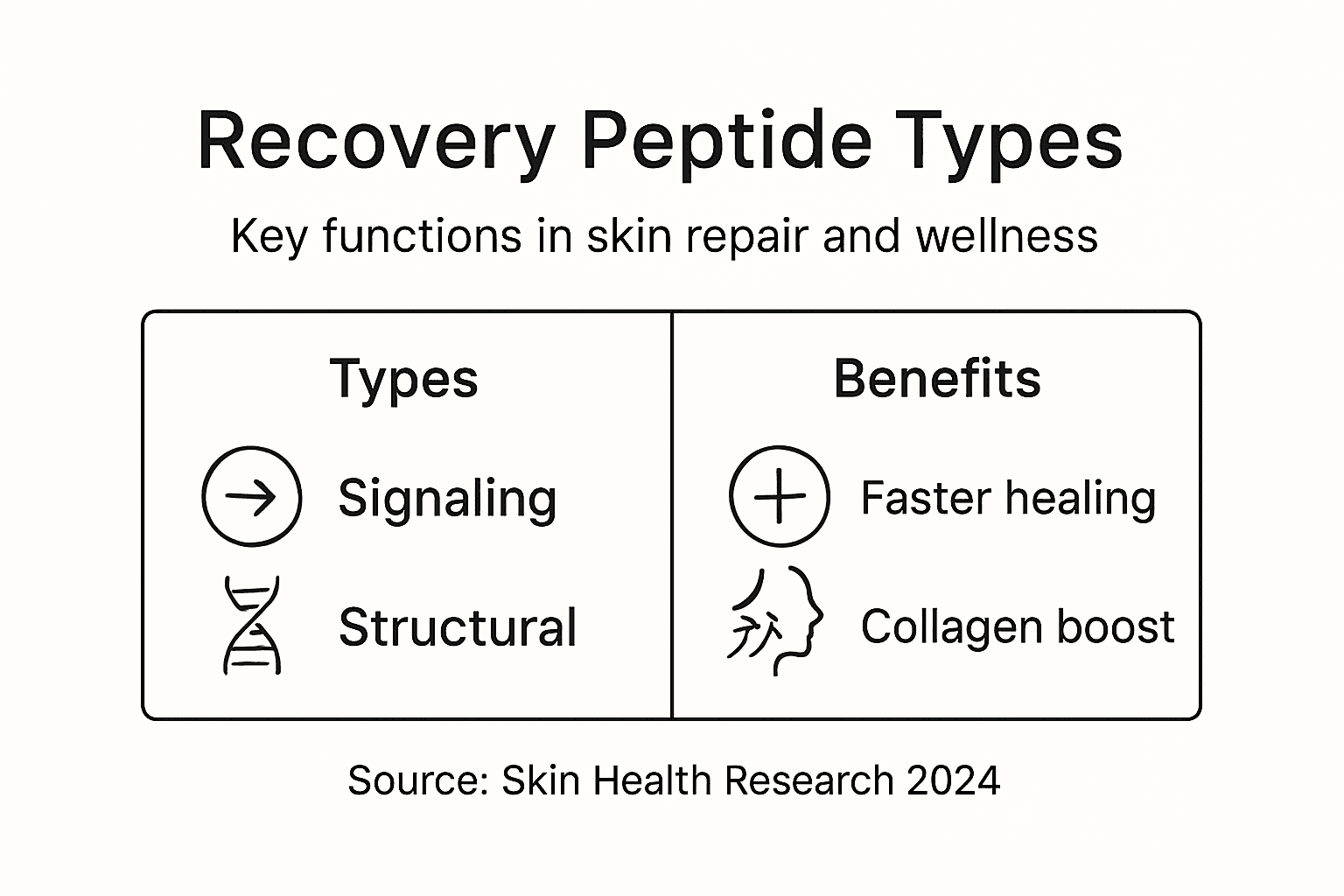
Here’s a summary comparing major types of recovery peptides and their unique roles in cellular repair:
| Peptide Type | Main Function | Example Compound | Key Benefit |
|---|---|---|---|
| Signaling Peptides | Direct communication | BPC-157 | Accelerates tissue healing |
| Structural Peptides | Tissue building support | Collagen peptide | Enhances skin structure |
| Regenerative Peptides | Comprehensive repair | MGF | Promotes muscle recovery |
Pro tip: Consult with wellness professionals to identify the most appropriate recovery peptide type for your specific physiological needs and health objectives.
How Recovery Peptides Work in the Body
Recovery peptides function as sophisticated cellular communicators, operating through intricate biochemical mechanisms that facilitate healing and tissue regeneration. Why peptides are transforming modern wellness strategies centers on their remarkable ability to trigger precise biological responses at the molecular level.
These molecular messengers work through several key pathways:
- Signal Transduction: Peptides interact with specific cellular receptors
- Protein Synthesis Activation: Stimulating cellular repair mechanisms
- Inflammatory Response Modulation: Reducing cellular stress and promoting healing
- Cellular Communication Enhancement: Improving intercellular messaging
At the cellular level, recovery peptides act like microscopic conductors, orchestrating complex repair processes. They can trigger collagen production, support mitochondrial function, and help regulate oxidative stress. Essentially, these molecules communicate targeted instructions to cells, encouraging faster recovery, reduced inflammation, and more efficient healing processes.
Pro tip: Consider consulting wellness professionals to develop a personalized understanding of how specific recovery peptides might support your individual health objectives.
Real Uses in Skincare and Wellness Routines
Recovery peptides have revolutionized approaches to skincare and wellness by offering targeted solutions for skin repair and cellular regeneration. Benefits of peptides transform wellness strategies through their remarkable ability to support comprehensive skin health and rejuvenation.
Peptides are integrated into wellness routines through multiple application methods:
- Topical Treatments: Creams and serums containing bioactive peptides
- Supplements: Oral peptide formulations supporting internal skin health
- Professional Treatments: Advanced skincare procedures utilizing peptide technologies
- Targeted Skincare Protocols: Personalized approaches addressing specific skin concerns
Bioactive peptides play a critical role in skin health by stimulating collagen production, enhancing skin elasticity, and promoting wound healing. They work at the cellular level to improve skin barrier function, increase hydration, and support overall skin resilience. The scientific approach involves carefully selected peptide compounds that communicate directly with skin cells, encouraging faster repair processes and more efficient cellular regeneration.
Pro tip: Start with patch testing and gradual introduction of peptide-based products to understand your skin’s unique response and optimize potential benefits.
Risks, Side Effects, and Safe Use Practices
Peptide therapies offer significant wellness potential, but require careful consideration and professional guidance. Peptide safety protocols demand medical oversight to mitigate potential risks and ensure optimal outcomes for individuals exploring these advanced molecular treatments.
Key risk management strategies include:
- Consultation: Always work with certified healthcare professionals
- Quality Verification: Source peptides from reputable, regulated providers
- Individual Assessment: Understand personal health history and potential interactions
- Monitoring: Regular medical check-ups during peptide therapy
Potential side effects can range from mild immune responses to more complex interactions with existing medications. Individual variability means some people might experience skin irritation, allergic reactions, or hormonal fluctuations. The complexity of peptide interactions underscores the importance of personalized medical evaluation and ongoing professional guidance. Responsible use involves understanding individual biochemical profiles, potential contraindications, and maintaining realistic expectations about therapeutic outcomes.
The following table highlights safe practices and risks when using peptide therapies:
| Safe Practice | Reason for Use | Potential Risk | Professional Guidance Needed |
|---|---|---|---|
| Quality verification | Avoid unsafe products | Allergic reactions | Yes |
| Individual assessment | Identify contraindications | Hormonal fluctuations | Yes |
| Regular monitoring | Track therapy effects | Immune system sensitivity | Yes |
Pro tip: Maintain a detailed health journal documenting any changes or responses when introducing peptide-based treatments to provide comprehensive information to your healthcare provider.
Elevate Your Skin Repair Journey with Targeted Peptide Wellness
If you are looking to overcome challenges like slow skin recovery, inflammation, or diminished collagen production, understanding the power of specific recovery peptides is essential. This article highlighted how signaling peptides such as BPC-157, structural peptides like collagen peptides, and regenerative peptides drive precise cellular communication to boost healing and skin resilience. Recognizing these key pain points and treatment goals positions you to experience real, lasting skin wellness.

Discover how EmilySandersLifestyle.com can support your personalized peptide skincare and wellness routine with research-driven guidance and curated lifestyle solutions. Explore expert insights on peptide benefits crafted to help you optimize skin vitality and maintain balance for the long term. Take control of your skin’s future today by diving deeper into peptide education and adopting sustainable self-care practices at Emily Sanders Lifestyle. Start your transformation now and bring the science of peptides into your everyday self-care.
Frequently Asked Questions
What are recovery peptides and how do they work?
Recovery peptides are short chains of amino acids that act as molecular messengers to facilitate skin repair and aid in cellular regeneration. They work by signaling skin cells to promote collagen production, reduce inflammation, and enhance overall skin resilience.
What types of recovery peptides are available and what are their specific functions?
There are three primary types of recovery peptides: signaling peptides (like BPC-157 that aid in tissue healing), structural peptides (such as collagen peptides that support skin structure), and regenerative peptides (like Mechano Growth Factor that promotes muscle recovery). Each type targets different biological processes to enhance overall wellness.
How should recovery peptides be used in skincare routines?
Recovery peptides can be incorporated into skincare routines through topical treatments like creams and serums, as well as oral supplements. It’s crucial to start with patch testing and gradually introduce these products to assess your skin’s response for optimal benefits.
Are there any risks or side effects associated with recovery peptides?
Yes, there are potential risks and side effects, including mild allergic reactions or hormonal fluctuations. It’s important to consult with healthcare professionals when considering peptide therapies to ensure safe and effective use, and to monitor individual responses throughout the treatment process.
Recommended
- Why Peptides Are Revolutionizing Modern Skincare – EMILY SANDERS LIFESTYLE
- Benefits of Peptides: Complete Wellness and Glow Guide – EMILY SANDERS LIFESTYLE
- Are Peptides Right for You? Skincare, Wellness & Beyond – EMILY SANDERS LIFESTYLE
- Peptides 2026: Skincare Breakthroughs and Ageless Glow – EMILY SANDERS LIFESTYLE
- 7 Essential Hair Products for Damaged Hair Recovery | MyHair
0 comments