
Most american skincare enthusiasts now seek more than just surface-level fixes, with over 60 percent showing interest in advanced ingredients like peptides. These tiny protein chains quietly influence everything from skin elasticity to deeper cellular repair. As more people want results backed by science, understanding peptides becomes crucial for anyone aiming to improve both their appearance and wellness. This guide breaks down what peptides are, revealing how they work and why they matter in modern routines.
Table of Contents
- What Are Peptides In Skincare And Wellness
- Types Of Peptides And Their Functions
- How Peptides Work For Ageless Beauty
- Safety, Side Effects, And Myths Explained
- Incorporating Peptides Into Daily Routines
Key Takeaways
| Point | Details |
|---|---|
| Peptides as Communication Signals | Peptides act as critical messengers in the body, promoting cellular processes for skin health and overall wellness. |
| Types of Peptides | Different peptide categories target specific functions, including stimulation of collagen production, delivery of nutrients, and protection against microorganisms. |
| Holistic Benefits | Integrating peptides into skincare and wellness routines can enhance cellular rejuvenation and improve skin appearance over time. |
| Informed Usage | Understanding the specific actions and proper integration of peptides is essential for effective results and avoiding common misconceptions. |
What Are Peptides in Skincare and Wellness
Peptides are revolutionary molecular compounds that act as critical communication signals within our body’s complex biological systems. According to mdpi.com, peptides are bioactive compounds that offer remarkable benefits across skincare and wellness domains, targeting specific cellular processes to enhance overall health and appearance.
Amino Acid Foundations
At their core, peptides are short chains of amino acids that function as fundamental protein building blocks. As highlighted by aestheticnursing.co.uk, these molecular structures play crucial roles in skin health by:
- Promoting collagen synthesis
- Enhancing skin elasticity
- Supporting the skin’s microbiome
- Triggering cellular repair mechanisms
When applied topically or consumed through targeted wellness strategies, peptides work as intelligent messengers instructing skin cells to perform optimized regeneration and protection functions. Their precision targeting makes them significantly more advanced than traditional skincare ingredients.
In wellness contexts, peptides transcend mere cosmetic improvements. They represent a sophisticated approach to cellular communication, potentially influencing everything from skin renewal to muscle recovery. By understanding and strategically utilizing these molecular powerhouses, individuals can unlock more comprehensive approaches to personal health and aesthetic maintenance. Check out our guide on cultivating daily wellness naturally to explore more holistic health strategies that complement peptide integration.
Types of Peptides and Their Functions
Peptides represent a sophisticated world of molecular diversity, with each type engineered to target specific wellness and skincare functions. According to aestheticnursing.co.uk, peptides are strategically categorized based on their unique capabilities, offering precise interventions for skin health and cellular regeneration.
Primary Peptide Categories
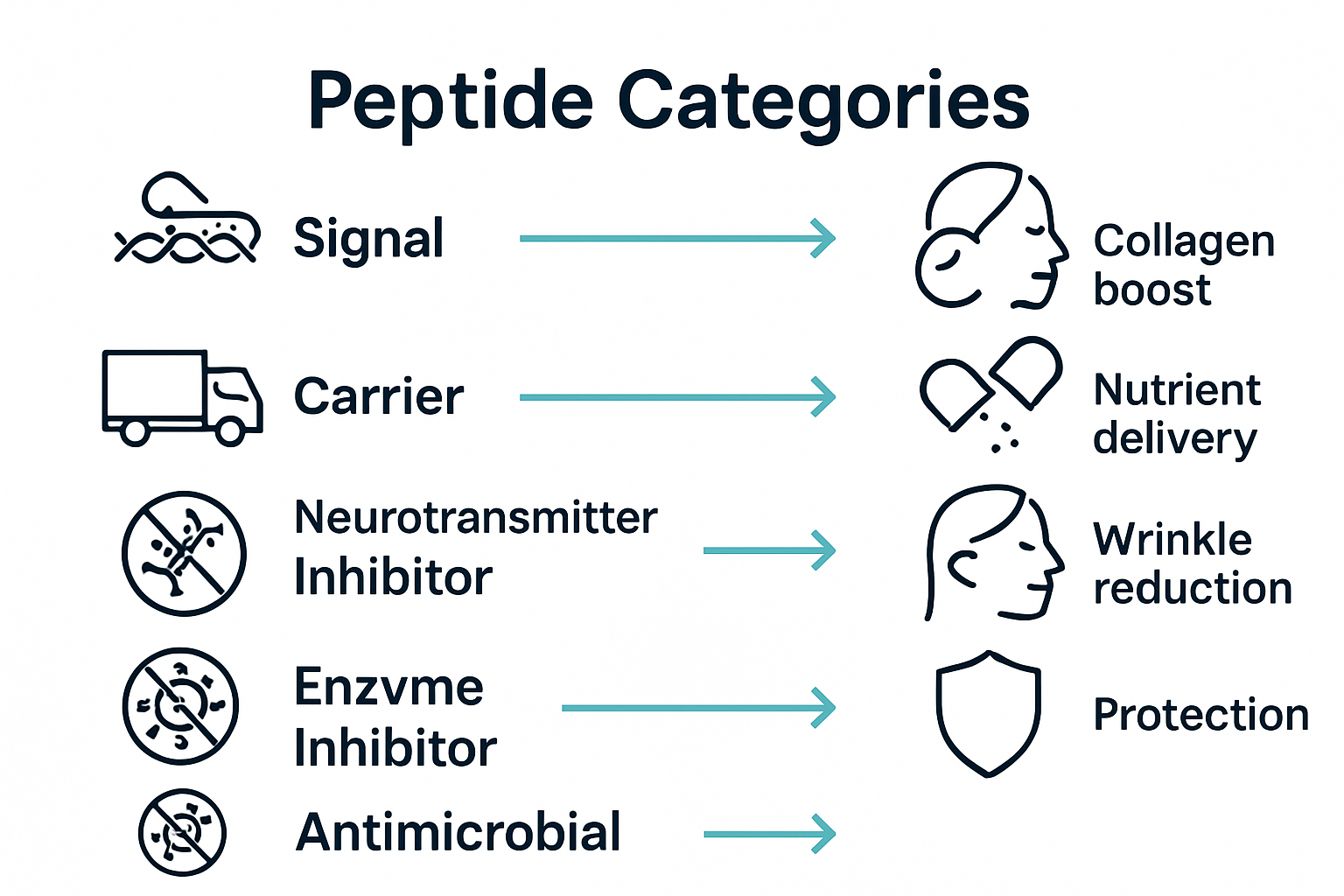
The key peptide classifications include:
- Signal Peptides: Stimulate collagen and elastin synthesis
- Carrier Peptides: Deliver essential trace elements to skin cells
- Neurotransmitter Inhibitor Peptides: Reduce muscle contractions to minimize wrinkle formation
- Enzyme Inhibitor Peptides: Prevent collagen breakdown
- Antimicrobial Peptides: Protect against harmful microorganisms
From a wellness perspective, mdpi.com highlights that cosmetic peptides extend beyond traditional skincare, encompassing multifunctional benefits like anti-aging, skin whitening, repair, moisturization, and immune response modulation. These bioactive compounds work at a cellular level, providing targeted interventions that go far beyond surface-level treatments.

Understanding the nuanced roles of different peptide types empowers individuals to make informed choices about their skincare and wellness strategies. By selecting peptides that align with specific skin concerns or health objectives, you can create a personalized approach to cellular rejuvenation and protection.
 Explore our tutorial on glow-enhancing habits to learn how to integrate these powerful molecular compounds into your daily wellness routine.
How Peptides Work for Ageless Beauty
Peptides are transformative molecular architects of skin rejuvenation, offering a sophisticated approach to combating the visible signs of aging. According to mdpi.com, these powerful compounds contribute to ageless beauty by strategically promoting collagen and elastin production while simultaneously inhibiting enzymes that degrade these critical skin proteins.
Cellular Rejuvenation Mechanisms
The process of peptide-driven skin renewal is intricate and multifaceted. Aestheticnursing.co.uk reveals that peptides work through several key mechanisms:
- Stimulating collagen synthesis
- Enhancing skin’s structural integrity
- Reducing muscle contractions that cause wrinkles
- Improving overall skin elasticity and texture
These molecular messengers essentially communicate with skin cells, triggering regenerative processes that go far beyond surface-level treatments. By modulating muscle contractions and supporting the skin’s natural repair mechanisms, peptides help create a more youthful, radiant appearance that reflects true cellular health.
Understanding peptides as intelligent skin companions opens up exciting possibilities for holistic beauty approaches. They don’t just mask aging signs but actively work to restore and maintain skin’s natural resilience.
Explore our guide to embracing ageless wellness to discover how integrating peptide-based strategies can revolutionize your skincare and wellness journey.
Safety, Side Effects, and Myths Explained
The world of peptides is exciting, but it requires a nuanced understanding of potential risks and realistic expectations. Apnews.com highlights a growing trend of unapproved peptide use driven by online influencers and wellness entrepreneurs, underscoring the critical need for informed and cautious approach to these molecular compounds.
Common Peptide Misconceptions
Several myths surrounding peptides can lead consumers astray:
- Myth: Peptides are a miracle overnight solution
- Reality: Cellular regeneration takes consistent, patient application
- Myth: All peptides work identically for everyone
- Reality: Individual skin responses vary significantly
- Myth: More peptides always mean better results
- Reality: Precise, targeted application matters more than quantity
As noted by aestheticnursing.co.uk, it’s essential to consider the quality of scientific evidence supporting peptide efficacy and safety. While peptides offer promising regenerative benefits, they are not a universal solution and should be approached with informed caution.
Navigating the peptide landscape requires critical thinking and personalized research. Explore our guide to embracing ageless wellness to develop a balanced, science-backed approach to incorporating peptides into your wellness routine.
Incorporating Peptides Into Daily Routines
Transforming your skincare and wellness approach with peptides requires strategic, thoughtful integration into your daily regimen. Aestheticnursing.co.uk recommends selecting evidence-backed formulations and maintaining consistent application to maximize potential benefits.
Strategic Peptide Integration
Effective peptide incorporation involves several key principles:
- Identify specific skin concerns
- Choose targeted peptide formulations
- Apply products consistently
- Layer with complementary ingredients
- Monitor skin’s response and adapt
According to mdpi.com, successful peptide integration means selecting products that address individual skin needs and maintaining a disciplined application routine. This approach transforms peptides from mere ingredients into powerful cellular communication tools that support long-term skin health and regeneration.
Building a peptide-powered wellness routine is about creating a personalized, science-backed strategy that evolves with your skin’s changing needs. Explore our guide on why routines boost beauty to discover how consistent, intentional practices can revolutionize your approach to skincare and holistic well-being.
Unlock the Power of Peptides for Lasting Glow and Wellness
Understanding peptides is the first step to tackling common skin concerns like loss of elasticity, wrinkles, and uneven texture. These intelligent molecules communicate with your skin cells to promote collagen synthesis and regeneration. But navigating peptide products can feel overwhelming without clear guidance. Our community at EmilySandersLifestyle.com empowers you to transform this knowledge into action with easy routines and trusted insights.

Discover how to build a radiant glow and embrace ageless beauty through simple, targeted daily habits. Start by exploring our tailored guides such as How to Cultivate Daily Wellness Naturally and the Glow-Enhancing Habits Tutorial. Take the next step now to personalize your self-care journey and unlock the full benefits of peptide-powered wellness at EmilySandersLifestyle.com.
Frequently Asked Questions
What are peptides in skincare?
Peptides are short chains of amino acids that act as important signals within the body, promoting collagen synthesis, enhancing skin elasticity, and supporting cellular repair mechanisms for overall skin health.
What types of peptides exist, and what do they do?
Peptides can be categorized into several types, including signal peptides (stimulate collagen production), carrier peptides (deliver essential trace elements), neurotransmitter inhibitor peptides (reduce muscle contractions to minimize wrinkles), enzyme inhibitor peptides (prevent collagen breakdown), and antimicrobial peptides (protect against harmful microorganisms).
How do peptides help with aging skin?
Peptides help combat aging by promoting collagen and elastin production, enhancing skin’s structural integrity, reducing muscle contractions that cause wrinkles, and improving overall skin elasticity and texture.
Are there any safety concerns or side effects associated with peptide use?
While peptides offer promising skin benefits, misconceptions exist. It’s essential to apply them consistently for best results, as individual responses can vary, and not all peptides work the same for everyone. Always choose quality products based on scientific evidence.
Recommended
- Glow-Enhancing Habits Tutorial for Radiant, Ageless Beauty – EMILY SANDERS LIFESTYLE
- How to Cultivate Daily Wellness Naturally for Ageless Radiance – EMILY SANDERS LIFESTYLE
- Why Routines Boost Beauty: Complete Guide for Women – EMILY SANDERS LIFESTYLE
- Complete Guide to Embracing Ageless Wellness – EMILY SANDERS LIFESTYLE
- Why Beauty Inside Out: Complete Guide to Holistic Glow – Pure Light Botanical Beauty
- Morning Skincare Routine Steps for Glowing Skin Results
0 comentarios