
More than one in three american adults faces metabolic health concerns that can impact quality of life. With so many new therapies making headlines, understanding what sets each one apart is vital for anyone curious about next-level treatments. Retatrutide stands out thanks to its unique triple action on key hormone receptors and its once-weekly dosing schedule, offering a revolutionary approach that researchers believe could change the future for metabolic health in the american population.
Table of Contents
-
What Is Retatrutide Peptide
-
How Retatrutide Targets Three Hormones
-
Clinical Trial Results And Benefits
-
Safety Profile And Side Effects
-
Legal Status And Underground Risks
Key Takeaways
Point |
Details |
|---|---|
Innovative Triple Agonist |
Retatrutide is a synthetic peptide designed to target GLP-1, GIP, and Glucagon receptors, enhancing metabolic regulation. |
Extended Half-Life for Dosing |
Its unique structure allows for once-weekly subcutaneous dosing, improving patient compliance. |
Promising Clinical Benefits |
Clinical trials show significant improvements in triglyceride levels, liver health, and metabolic regulation, beyond weight loss. |
Complex Regulatory Landscape |
Retatrutide is still investigational and poses health risks if obtained through unauthorized channels, highlighting the importance of medical supervision. |
What Is Retatrutide Peptide
Retatrutide represents an innovative synthetic peptide molecule that’s generating significant excitement in medical research circles. Developed by medical.lilly.com, this compound is a groundbreaking triple agonist designed to interact with multiple metabolic receptors simultaneously.
According to en.wikipedia.org, retatrutide is specifically engineered as a 39-amino acid peptide with a unique structural backbone derived from a GIP (glucose-dependent insulinotropic polypeptide) peptide. Its distinctive molecular design allows it to target three critical receptors:
-
GLP-1 Receptor: Associated with insulin secretion and glucose metabolism
-
GIP Receptor: Influences insulin sensitivity and metabolic regulation
-
Glucagon Receptor: Helps manage energy expenditure and metabolic processes
The peptide’s most remarkable feature is its extended half-life, which enables convenient once-weekly subcutaneous dosing. This characteristic sets retatrutide apart from many traditional peptide treatments, offering patients a more streamlined therapeutic approach.
 Its potential applications span multiple metabolic and physiological domains, making it a fascinating subject of ongoing medical research.
How Retatrutide Targets Three Hormones
Retatrutide represents a sophisticated molecular approach to metabolic regulation, uniquely designed to simultaneously interact with three distinct hormone receptors. According to medical.lilly.com, the peptide demonstrates remarkable receptor activation capabilities with varying levels of potency.
The triple hormone targeting mechanism works through precise molecular interactions:
-
GIP Receptor: Shows an impressive 8.9-fold greater potency compared to human GIP
-
GLP-1 Receptor: Activates with specific targeted signaling
-
Glucagon Receptor: Modulates metabolic processes with strategic precision
Research from alzdiscovery.org highlights that this innovative peptide has been strategically modified to resist enzymatic degradation. By extending its half-life beyond traditional peptide structures, retatrutide offers enhanced therapeutic potential.
This molecular engineering allows for more sustained hormonal interaction, potentially providing more stable and consistent metabolic regulation compared to native peptide compounds.
Clinical Trial Results And Benefits
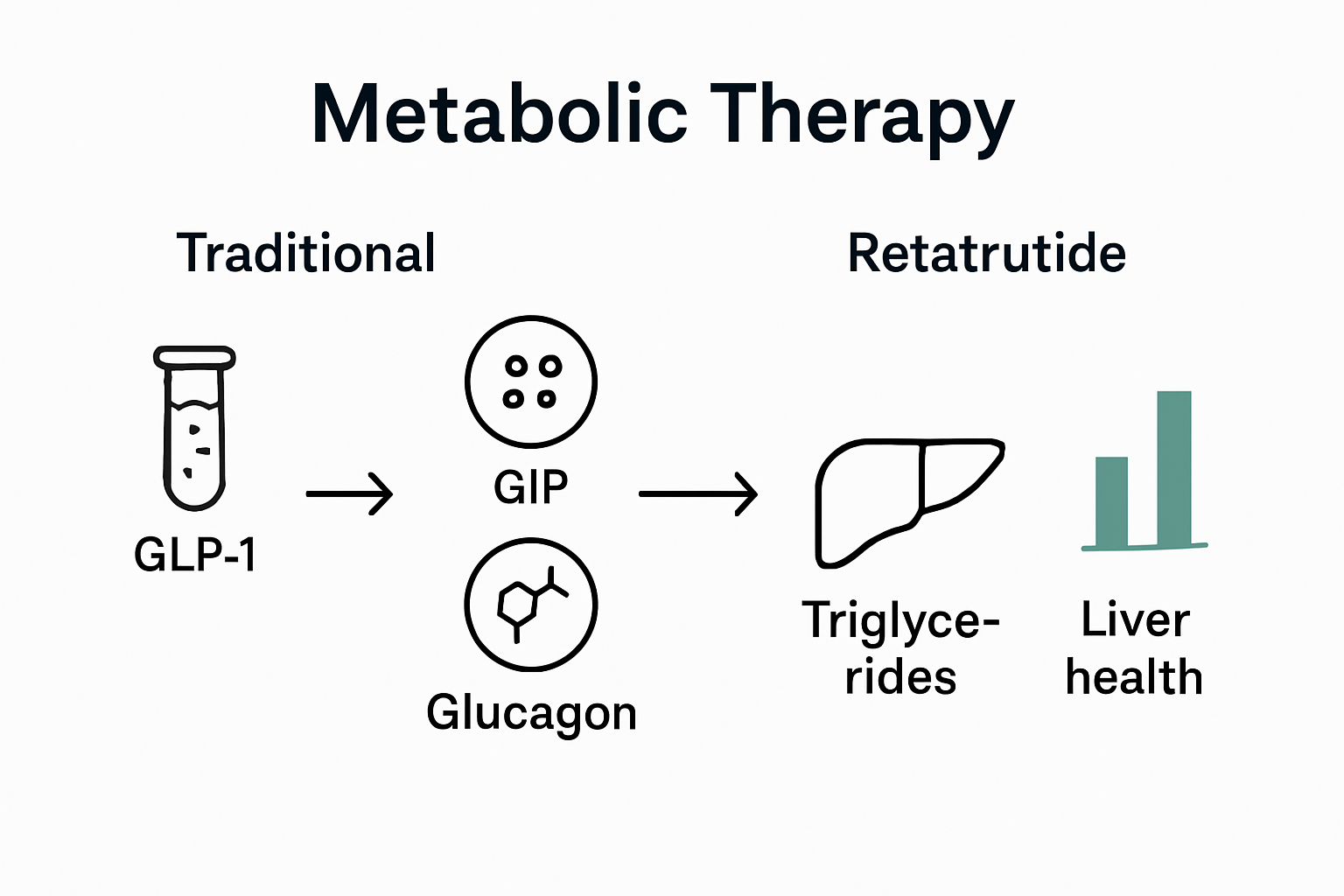
Clinical trials for retatrutide have unveiled promising results that extend far beyond traditional weight management approaches. Reuters reports groundbreaking mid-stage clinical findings that highlight the peptide’s multifaceted health benefits.
The research revealed several significant metabolic improvements:
-
Triglyceride Reduction: Substantial decrease in triglyceride levels
-
Protein Modulation: Notable reduction in apoC-III protein
-
Liver Health: Meaningful improvements in liver fat content
These comprehensive findings suggest that retatrutide might represent more than just a weight loss solution. Its potential metabolic impacts could revolutionize how researchers approach complex health conditions, offering a holistic approach to managing metabolic syndrome, cardiovascular risk factors, and potential liver-related health challenges. The peptide’s ability to simultaneously target multiple metabolic pathways positions it as a potentially transformative therapeutic intervention with wide-ranging health implications.
Safety Profile And Side Effects
Retatrutide’s safety profile presents a nuanced picture of potential benefits and considerations for patients. The Preptide highlights that the peptide’s side effect profile closely aligns with other incretin mimetic medications, characterized by a predictable range of potential reactions.
The most common side effects typically involve the gastrointestinal system and are generally dose-dependent:
-
Mild Gastrointestinal Discomfort: Nausea, bloating, and occasional digestive irregularities
-
Potential Metabolic Adjustments: Temporary changes in appetite and digestion
-
Rare Serious Complications: Minimal risk of pancreatitis or gallbladder issues
Patients considering retatrutide should maintain open communication with healthcare providers, carefully monitoring individual responses. While the medication shows promising metabolic benefits, individual reactions can vary. Comprehensive medical supervision and personalized assessment remain crucial in determining the most appropriate treatment strategy, ensuring both safety and optimal therapeutic outcomes.
Legal Status And Underground Risks
Retatrutide currently exists in a complex regulatory landscape that demands careful understanding. The Preptide confirms that the peptide is an investigational drug candidate currently undergoing large-scale Phase 3 clinical trials, which means it has not received FDA or global regulatory approval for prescription or therapeutic use.
The potential risks associated with unauthorized use are significant and multifaceted:
-
Regulatory Noncompliance: No legal pathways for personal acquisition
-
Health Risks: Potential for uncontrolled side effects
-
Quality Concerns: High probability of contaminated or mislabeled substances

0 commentaire