
More than 60 percent of American women in their forties and fifties actively seek new ways to care for their skin and overall well-being. As concerns about maintaining vitality and youthful radiance grow, understanding what peptides are and how they work becomes increasingly valuable. Here, you will discover how advanced peptide solutions can support your wellness journey while aligning with modern, eco-conscious routines.
Table of Contents
- What Are Peptides And How They Work
- Types Of Peptides In Skincare And Wellness
- Peptide Benefits For Skin Vitality And Aging
- How To Use Peptides Safely And Effectively
- Risks, Myths, And Common Mistakes
Key Takeaways
| Point | Details |
|---|---|
| Importance of Peptides | Peptides serve as essential chemical messengers in biological systems, facilitating communication and structural support in living organisms. |
| Skincare Applications | Peptides are recognized for their targeted therapeutic potential in skincare, aiding in hydration, collagen production, and reducing signs of aging. |
| Safe Usage Practices | To maximize benefits, incorporate peptides gradually into your routine and consult healthcare professionals for personalized guidance. |
| Awareness of Risks | Understanding potential side effects and myths surrounding peptides is crucial for responsible use and effective wellness outcomes. |
What Are Peptides And How They Work
Peptides are fascinating molecular structures that serve as crucial chemical messengers within biological systems. At their core, peptides are short chains of amino acids linked by peptide bonds/26%3A_Biomolecules-_Amino_Acids_Peptides_and_Proteins/26.04%3A_Peptides_and_Proteins), typically composed of fewer than 50 amino acid units. These molecular compounds play pivotal roles in communication, signaling, and structural support across living organisms.
The unique characteristics of peptides stem from their precise amino acid sequence, which determines their specific biological functions. Unlike larger protein molecules, peptides can move more quickly through cellular environments and interact with receptors in targeted ways. Their compact size allows them to act as efficient biochemical triggers, initiating complex cellular responses with remarkable precision. Peptides can function as hormones, neurotransmitters, growth factors, and even contribute to immune system regulation.
From a wellness perspective, peptides have gained significant attention for their potential applications in skincare, muscle recovery, and overall cellular health. Modern research explores peptides as promising compounds that might support natural biological processes, offering insights into how molecular-level interactions can influence broader health outcomes. Their ability to communicate specific instructions to cells makes them fascinating subjects in contemporary wellness research.
Pro tip: When exploring peptide-based wellness strategies, always consult with healthcare professionals to understand how specific peptide compounds might align with your individual health goals and biological needs.
Types Of Peptides In Skincare And Wellness
In the world of wellness and skincare, peptides represent a sophisticated category of molecular compounds with targeted therapeutic potential. Cosmeceutical peptides are primarily categorized into three main types: neurotransmitter inhibitors, carrier peptides, and signal peptides. Each type serves a unique function in promoting skin health and cellular renewal, offering precise approaches to addressing specific wellness concerns.
Neurotransmitter inhibitor peptides work by temporarily reducing muscle contractions, which can help minimize the appearance of fine lines and wrinkles. Carrier peptides facilitate the delivery of essential minerals and nutrients directly to skin cells, supporting natural regeneration processes. Signal peptides are particularly fascinating, as they communicate with skin cells to stimulate collagen production, enhance elastin formation, and support overall skin structure. Peptides in skincare help boost skin health by targeting inflammation, improving elasticity, and promoting a more youthful appearance through sophisticated molecular interactions.
Modern wellness approaches increasingly recognize peptides as powerful tools for sustainable self-care. Their ability to interact specifically with biological targets makes them compelling alternatives to traditional skincare ingredients. Modern research into peptides continues to reveal their potential in supporting skin repair, reducing signs of aging, and promoting overall cellular health. By understanding the nuanced roles of different peptide types, individuals can make more informed choices about their skincare and wellness routines.
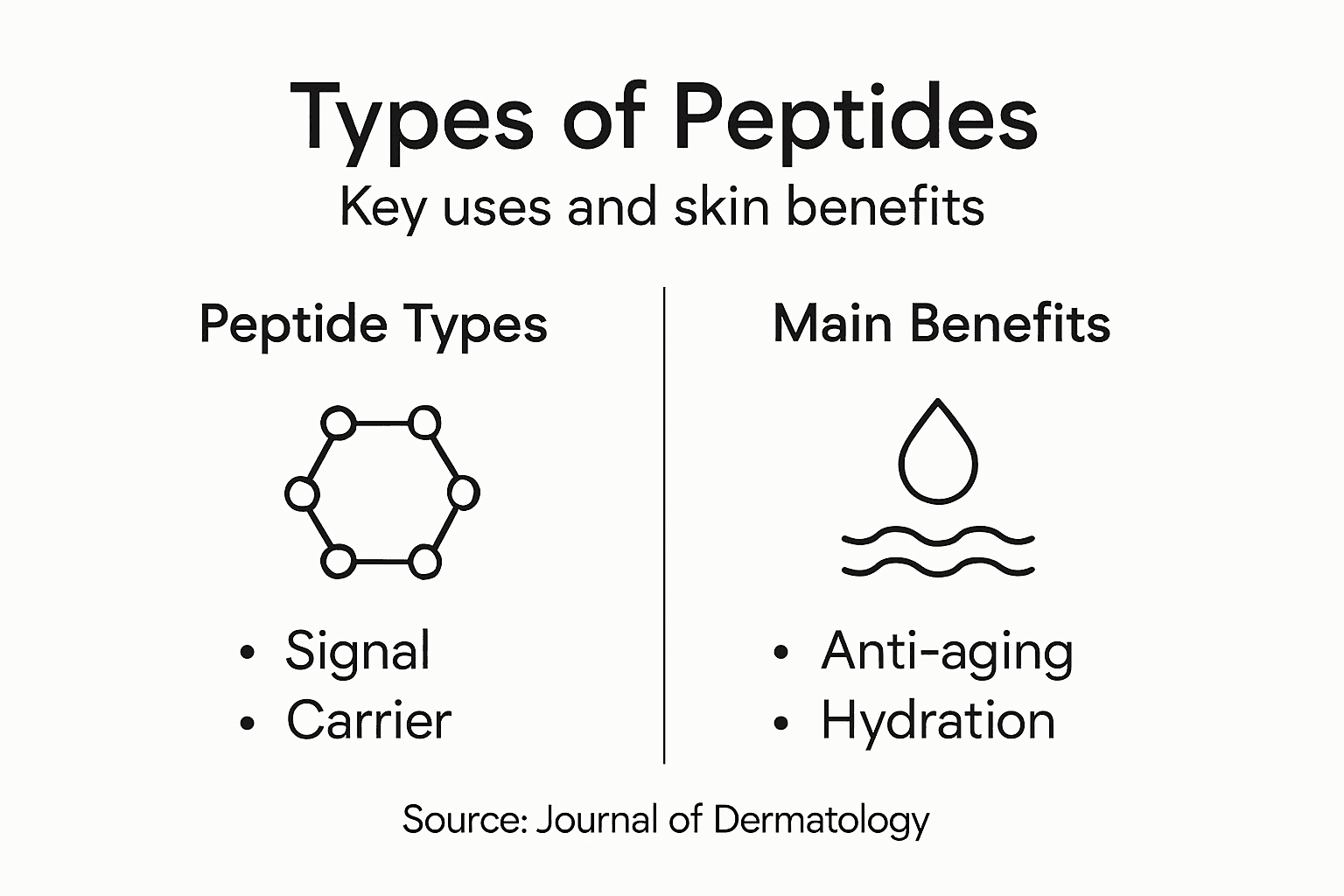
Here’s a quick comparison of the main types of peptides used in skincare and their distinctive roles:
| Peptide Type | Primary Function | Key Benefit for Skin |
|---|---|---|
| Neurotransmitter Inhibitor | Reduces muscle contractions | Minimizes fine lines |
| Carrier Peptides | Delivers minerals to cells | Promotes skin regeneration |
| Signal Peptides | Stimulates collagen production | Improves firmness and elasticity |
Pro tip: When selecting peptide-based products, look for formulations that specify the exact type of peptides used and their targeted benefits to ensure you’re choosing the most appropriate solution for your specific skin concerns.
Peptide Benefits For Skin Vitality And Aging
Peptides have emerged as powerful allies in the pursuit of graceful aging and sustained skin vitality. Peptide-based therapies demonstrate significant benefits in addressing multiple dimensions of skin health, offering a nuanced approach to counteracting the visible and structural signs of aging. These molecular compounds work at a cellular level to support skin’s natural regenerative processes, providing a sophisticated alternative to traditional skincare solutions.
Peptides help improve skin hydration by stimulating critical protein production like collagen and elastin, which are fundamental to maintaining skin’s structural integrity. Their anti-inflammatory properties play a crucial role in mitigating chronic inflammation that accelerates aging signs such as wrinkles, discoloration, and loss of elasticity. By supporting the extracellular matrix and enhancing the skin’s natural repair mechanisms, peptides offer a comprehensive strategy for maintaining a youthful, resilient complexion.

Modern wellness approaches increasingly recognize peptides as sophisticated tools for holistic skin health. Exploring peptide benefits reveals their potential to address both intrinsic and extrinsic aging factors. Clinical trials consistently demonstrate their effectiveness in supporting skin renewal, protecting against environmental damage, and promoting a more radiant, even-toned appearance. The targeted nature of peptides allows for personalized skincare strategies that adapt to individual skin needs and aging concerns.
Pro tip: Integrate peptide-based products gradually into your skincare routine, starting with lower concentrations and patch testing to observe how your unique skin responds to these advanced molecular compounds.
How To Use Peptides Safely And Effectively
Peptide usage requires a strategic and informed approach to ensure maximum benefit and minimal risk. Understanding the nuanced considerations for incorporating peptides into wellness routines is essential for responsible self-care. While peptides offer promising potential for skin health and cellular renewal, safe administration techniques are critical for maintaining optimal results and personal well-being.
Topical peptide applications through skincare products offer a more accessible entry point for most individuals. These formulations allow for gradual introduction and lower risk compared to injectable protocols. When selecting peptide-based products, prioritize reputable brands with transparent ingredient lists and scientifically validated formulations. Peptide safety strategies involve understanding your personal skin profile, potential sensitivities, and conducting patch tests before full-scale implementation.
Consultation with healthcare professionals remains paramount when considering advanced peptide protocols. Individual metabolic differences, existing health conditions, and potential interactions necessitate personalized guidance. Modern peptide exploration emphasizes a holistic approach that considers overall wellness, integrating peptides as part of a comprehensive health strategy rather than an isolated intervention.
Pro tip: Start with low-concentration peptide products and gradually increase usage, maintaining a detailed journal to track your skin’s response and any potential subtle changes in your wellness routine.
The following table summarizes safe practices for effective peptide use:
| Step | Purpose | Best Practice |
|---|---|---|
| Patch Testing | Identify sensitivity | Test product on small skin area |
| Gradual Use | Ease skin adjustment | Increase concentration slowly |
| Consult Experts | Personalize protocol | Seek medical guidance |
| Track Results | Monitor effectiveness | Keep detailed response journal |
Risks, Myths, And Common Mistakes
Navigating the world of peptides requires a discerning approach that separates scientific fact from marketing hype. Potential health risks of peptides extend beyond simple marketing claims, encompassing complex physiological interactions that demand careful consideration. Understanding these nuanced risks helps individuals make informed decisions about incorporating peptides into their wellness routines.
Common myths surrounding peptides often stem from oversimplified narratives about their effectiveness. Many individuals mistakenly believe peptides are universal solutions that work identically for everyone, overlooking individual metabolic differences and potential contraindications. Peptide safety strategies emphasize the importance of personalized approaches, recognizing that what works for one person might not be suitable for another. Potential side effects can include hormonal disruptions, digestive issues, and unexpected skin reactions, underscoring the need for professional guidance.
Misuse represents another significant concern in peptide wellness. Common mistakes include purchasing unverified products, self-administering without proper knowledge, and expecting instantaneous results. Modern peptide exploration highlights the importance of scientific literacy, urging individuals to approach peptide use with skepticism and thorough research. Understanding that peptides are sophisticated molecular compounds—not miracle solutions—is crucial for responsible wellness practices.
Pro tip: Always verify the source and quality of peptide products, requesting third-party lab testing documentation and consulting healthcare professionals before starting any new wellness protocol.
Unlock the Power of Peptides for Your Wellness Journey
If you are seeking to rejuvenate your skin and enhance overall vitality through scientifically backed peptide solutions you understand the challenges of navigating safe and effective peptide use. This article highlights common concerns like choosing the right peptide types for skin regeneration and aging, avoiding myths and mistakes, and integrating peptides into your daily self-care. You deserve clear guidance and trustworthy products that align with your unique goals around healthy aging and skin balance.

Explore expert insights and carefully curated solutions at Emily Sanders Lifestyle to start optimizing your peptide wellness routine today. Discover how peptide-based skincare and wellness can bring sustainable benefits through targeted formulas made for real skin needs. Don’t wait to transform your approach with peptide education and innovative products designed for modern self-care. Visit Peptide Wellness Solutions now and take the first step toward radiant skin and renewed vitality.
Frequently Asked Questions
What are peptides and how do they work in wellness?
Peptides are short chains of amino acids that act as chemical messengers in biological systems. They play a crucial role in communication, signaling, and structural support, essential for various wellness applications such as skincare, muscle recovery, and overall cellular health.
What types of peptides are commonly used in skincare and their benefits?
There are three main types of peptides: neurotransmitter inhibitors, carrier peptides, and signal peptides. Neurotransmitter inhibitors reduce muscle contractions to minimize fine lines, carrier peptides deliver essential nutrients to skin cells for regeneration, and signal peptides stimulate collagen production and improve skin firmness and elasticity.
How can I safely incorporate peptides into my skincare routine?
To safely use peptides, start with topical products that have transparent ingredient lists and patch test any new product on a small skin area. Gradually increase usage, monitor your skin’s response, and consult with healthcare professionals if needed.
What are some common myths and mistakes regarding peptide use?
Common myths include the belief that peptides work universally for everyone and are instant solutions. Mistakes often involve using unverified products, self-administering without knowledge, and overlooking personal metabolic differences. Always seek professional guidance and verify product quality before use.
Recommended
- Benefits of Peptides: Complete Wellness and Glow Guide – EMILY SANDERS LIFESTYLE
- Are Peptides Right for You? Skincare, Wellness & Beyond – EMILY SANDERS LIFESTYLE
- Ageless Self-Care: Timeless Beauty for Modern Women – EMILY SANDERS LIFESTYLE
- Why Peptides Are Revolutionizing Modern Skincare – EMILY SANDERS LIFESTYLE
- Hair and Skin Care: Expert Tips for Stronger Growth 2025 | MyHair
0 reacties